

Calreyn88, CC0, via Wikimedia Commons
Britain on the Brink: A 1950s Snapshot of Aspiration and Change
Britain in Transition: The Early 1950s Landscape
The early 1950s in the United Kingdom were marked by cautious optimism and profound cultural change. Emerging from the long shadows of World War II, the nation was still adjusting to peacetime life. Rationing had only recently ended, and the British public was eager to embrace new freedoms and luxuries after years of austerity. This atmosphere of renewal created fertile ground for innovation — whether in lifestyle, industry, or culture.
The Cost of Living and the Price of Petrol
Fuel was surprisingly affordable by today’s standards, costing around 5 to 6 pence per gallon (roughly 20-25 pence per liter). Still, the broader economy was fragile, with rising living costs putting pressure on many households. The average annual wage hovered between £300 and £400, meaning budgets were tight but aspirations were high. Despite these economic constraints, a growing appetite for style, sophistication, and quality goods was taking hold—especially among the new generation coming of age after the war.
A Revival in British Car Culture
This post-war period saw the British motor industry begin a vigorous comeback, with sports cars emerging as powerful symbols of freedom, speed, and modernity. The Jaguar XK120 had already set hearts racing with its groundbreaking speed and sleek, elegant design. But the public’s appetite was insatiable. They wanted the next evolution — a car that was faster, more refined, yet still retained the timeless elegance that Jaguar embodied.
The Pulse of Youth: Teddy Boys and Rock ‘n’ Roll
The vibrant youth culture of the 1950s, epitomized by the Teddy Boys, challenged traditional norms with rebellious fashion and a love for rock ‘n’ roll music. This cultural shift wasn’t just about clothes or music; it influenced how young people saw the world — including the cars they drove. Sporty, stylish vehicles became essential extensions of identity and freedom, perfectly matching their hunger for excitement and self-expression.
The Soundtrack of an Era
Music was a powerful force shaping the mood of the times. British artist Lonnie Donegan sparked the skiffle craze, while American rock ‘n’ roll pioneers like Elvis Presley and Bill Haley made waves across the Atlantic. Songs such as “Rock Island Line” and “Rock Around the Clock” dominated the charts, energizing the youth and embedding a spirit of adventure and change in popular culture.
Silver Screen Glamour and Rising Stars
Cinema flourished, providing escapism and inspiration. The British film industry produced hits like The Lavender Hill Mob (1951), while Hollywood classics like The African Queen (1951) captivated audiences worldwide. Stars such as Alec Guinness and Audrey Hepburn rose to prominence, and television slowly but surely became a household staple, connecting people to stories and entertainment like never before.
Politics and Reconstruction
On the political front, Winston Churchill’s return to power in 1951 signaled a steady hand guiding the nation through reconstruction. While Cold War tensions simmered internationally, the UK focused inward, aiming to rebuild its economy and modernize infrastructure. It was a time of balancing tradition with innovation — a theme echoed throughout British society.
Sports: Passion, Rivalry, and New Heroes
Sport remained a beloved national pastime. Football clubs like Arsenal and Manchester United battled fiercely for supremacy, fueling local pride and fierce rivalries. Legendary athletes like Stanley Matthews captured the public imagination, symbolizing dedication and excellence. Meanwhile, motorsport gained momentum, reflecting Britain’s deepening fascination with speed, technology, and competition.
The Birth of a Legend: Why the Jaguar XK140 Was Created

Amid this backdrop of cultural revival and rising affluence, Jaguar recognized an opportunity to build on the phenomenal success of the XK120. Introduced in 1954, the Jaguar XK140 wasn’t just a new car — it was a thoughtful evolution. Jaguar sought to refine what had already captivated sports car enthusiasts: greater comfort, improved handling, and more power, all wrapped in the same graceful lines that made the XK120 an icon.
The XK140 answered a growing desire for a sports car that was not only fast and thrilling but also more practical for everyday use. With upgraded interiors, better brakes, and subtle styling enhancements, Jaguar crafted a machine that balanced the raw excitement of racing heritage with the sophistication expected by discerning drivers.
Here’s a deeper dive into the XK140’s history:
The XK140 emerged to update the aging, yet successful, XK120, designed by Jaguar founder William Lyons. Jaguar sought to boost performance, refine styling, and broaden its appeal. While keeping the XK120’s essence, the XK140 received subtle, key styling updates, including:
- Revised front and rear bumpers with overriders.
- A redesigned grille with a more prominent Jaguar badge.
- A revised hood with a more sculpted appearance.
- Subtle changes to the side profile and rear end.
- Performance Enhancements:
- The XK140 continued to utilize the powerful 3.4-liter inline-six-cylinder engine that delivered.
- Power Output:
- 190 hp (142 kW) in standard form
- 210 hp (157 kW) in SE (Special Equipment) trim
- 220 hp (164 kW) in SE/MC (Special Equipment/Mille Miglia Competition) trim
- 0–60 mph:
- Approximately 8–9 seconds
- Top Speed:
- 120–125 mph (193–201 km/h) for standard models
- Over 130 mph (209 km/h) for SE/MC model
Other Improvements Include:
- Higher performance variants, such as the SE (Special Equipment) and SE/MC (Special Equipment/Mille Miglia Competition), offered increased power output.
- Improved suspension and steering systems enhanced handling and responsiveness.
- The introduction of disc brakes on higher-spec models significantly improved braking performance.
- Enhanced Comfort and Refinement:
- The XK140 featured a more refined interior with higher-quality materials and improved ergonomics.
- Increased attention was paid to interior space and comfort, making the car more suitable for longer journeys.
- Competition: The XK140 faced stiff competition from other high-performance sports cars of the era, including the Aston Martin DB2/4, the Mercedes-Benz 300 SL Gullwing, the Porsche 356, and the Triumph TR2/3.
Who Took the Wheel? The Drivers and Their Impressions
In Britain, the XK140 quickly found admirers among both professional racers and everyday motorists. Autocar magazine’s chief tester wrote, “The XK140 feels like a perfectly honed athlete — poised, powerful, and eager. Every corner is a conversation between driver and machine.” Such was the balance of performance and elegance that it set a new standard.

Across the Atlantic, American icons such as Steve McQueen and Carroll Shelby were drawn to the car’s British elegance paired with formidable performance. Shelby famously said, “The Jaguar XK140 was like poetry on wheels — smooth, fierce, and utterly addictive. It wasn’t just about speed; it was about style with substance.”
Crossing the Pond: The XK140’s American Reception

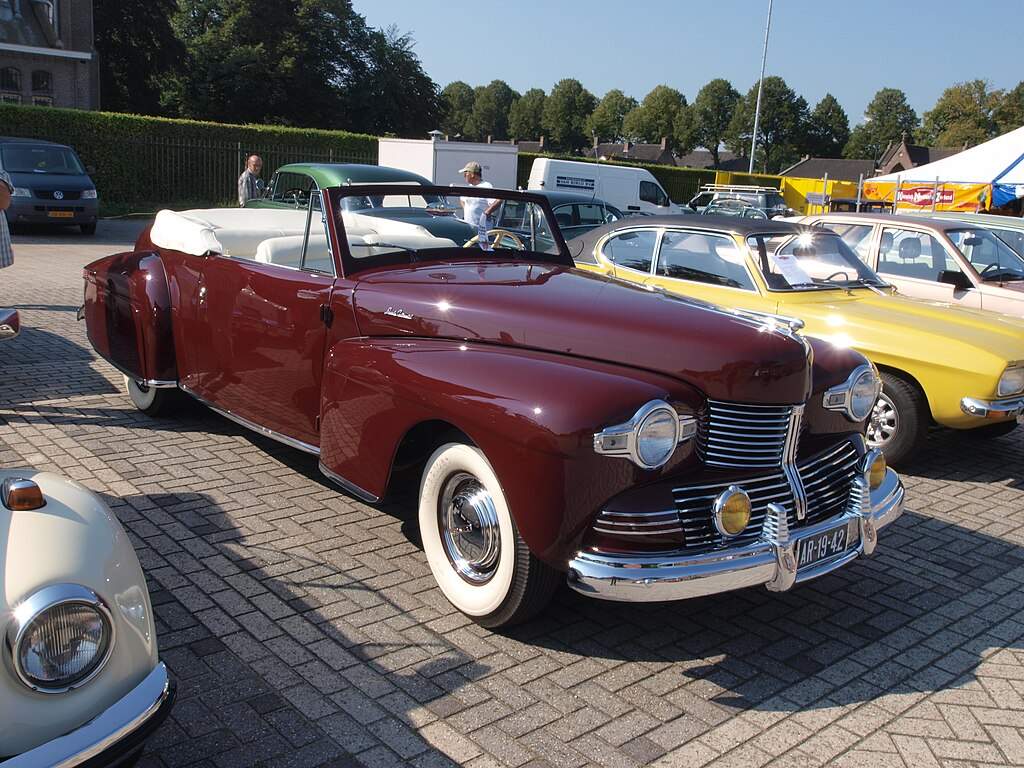
Across the Atlantic, the American automotive scene was dominated by large, powerful cars that emphasized size, luxury, and straight-line speed. Brands like Cadillac, Lincoln, and the Crown Imperial ruled the roads with their massive V8 engines, plush interiors, and bold styling — think gleaming chrome, big tailfins, and spacious cabins built for cruising in comfort.
Alongside these luxury giants, the Chevrolet Bel Air emerged as a stylish, full-size family car that combined eye-catching design with strong V8 power, becoming a favorite for middle-class Americans seeking flair and performance without the luxury price tag.
While these vehicles epitomized American success and style, their sheer size and weight meant they prioritized comfort and presence over nimble handling or driver engagement. For many enthusiasts, this created a yearning for something lighter, more agile, and unmistakably stylish.
Road & Track journalist Sam Posey remarked, “Driving the XK140 is like being handed the keys to a dream. It combines British sophistication with a heartbeat that’s pure racing spirit. It’s a car that commands attention without shouting.”
The car quickly became a symbol of status and sophistication, beloved by those who valued performance as much as panache.
Meeting the Competition: How the XK140 Stacked Up
Jaguar’s XK140 faced stiff competition in the mid-1950s from brands like Aston Martin and MG, which were pushing their own versions of sporty, high-performance cars. Here’s a snapshot of how the XK140 compared:
- Jaguar XK140 Engine: 3.4L I6 Power: 190-210 bhp From 0-60: 8-9 seconds Top Speed: 120-125 mph Price: $3,800
- Aston Martin DB2/4 Engine: 2.9L I6 Power: 140-165 bhp From 0-60: 9.5 seconds Top Speed: 120 mph Price: $4,500
- MG TF Engine: 1.3L I4 Power: 57 bhp From 0-60: 17 seconds Top Speed: 90 mph Price: $1,200
- Porsche 356 Engine: 1.3-1.6L Flat-4 Power: 40-70 bhp From 0-60: 15 seconds Top Speed: 100 mph Price: $3,000
With superior power and acceleration, the XK140 was a standout choice, positioning Jaguar as a leader in the luxury sports car segment. It wasn’t just a refinement; it was a confident assertion that Jaguar was here to dominate the sports car world.
Silver Screen Appearances: The XK140’s Cultural Impact
The XK140’s sleek design and performance didn’t go unnoticed by Hollywood. The car made memorable appearances in films such as The Thomas Crown Affair (1968), where its sophisticated silhouette perfectly complemented the film’s stylish heist narrative. It also featured in numerous British crime dramas and racing films, cementing its status as a cultural icon synonymous with speed, elegance, and adventure.
The Jaguar XK140: A Refined Evolution of a Classic

The Jaguar XK140 stands as a testament to timeless elegance and sporting prowess in the annals of automotive history, a shining star in Jaguar’s illustrious XK series. Following the groundbreaking XK120, Jaguar introduced its successor in 1954 and produced it until 1957. While visually similar to its predecessor, the XK140 was far more than a mere facelift; it represented a significant evolution, offering enhanced performance, improved comfort, and greater practicality, solidifying its place as a highly desirable classic today.
Legacy:
The XK140, while perhaps overshadowed by the iconic XK120, continued the legacy of Jaguar’s sporting heritage. It offered a blend of performance, elegance, and refinement that appealed to discerning drivers of the era. Today, the XK140 remains a highly sought-after classic car by collectors and enthusiasts worldwide.