
Featured Image by Gerhard Siebert on Unsplash
A Glimpse into AMG’s Future
The Mercedes-AMG GT Concept, unveiled at the 2017 Geneva International Motor Show, was more than a design study. It was a bold declaration of intent, glimpsing Affalterbach’s future and testifying to their relentless pursuit of performance and innovation.
It aimed to blend the raw AMG GT sports car experience with four-door sedan practicality. This feat was previously deemed incompatible with the brand’s core ethos.
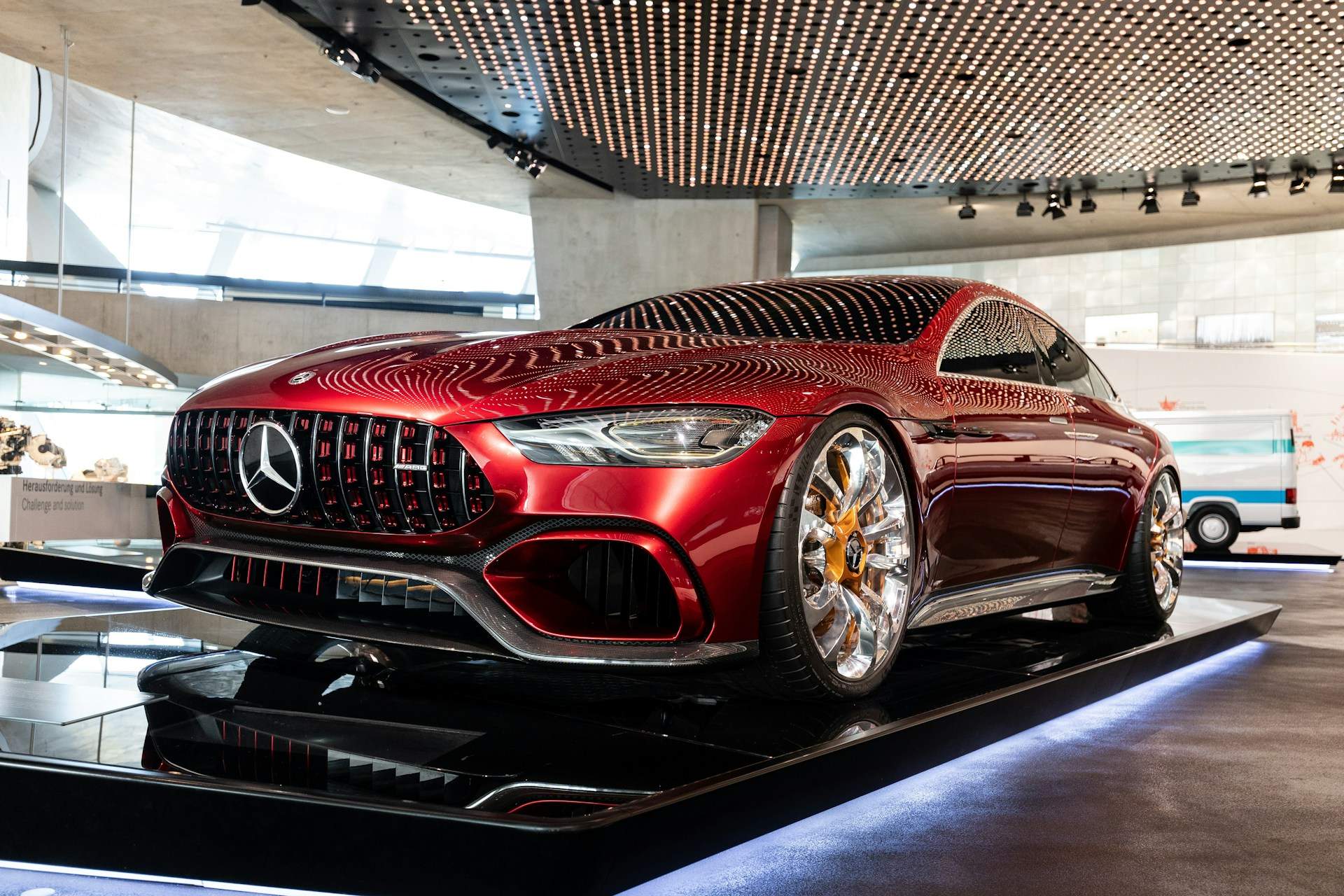
This sleek, low-slung predator sported striking “Hot Red” paintwork, designed to shimmer like “liquid metal.” It served as a tangible manifestation of AMG’s ambition to redefine the grand tourer segment.
Aerodynamic Elegance: The GT Concept’s Design Language
The GT Concept’s design language was a masterclass in aerodynamic efficiency and visual drama. Its long bonnet flowed seamlessly into a raked windshield and sloping roofline, ending in a sculpted, elegant, and aggressive rear.
Slender LED headlamps and flush touch sensors gave the front a piercing gaze and seamless profile. The signature Panamericana grille, with its vertical chrome slats, was a clear nod to AMG’s motorsport heritage, a visual cue that hinted at the car’s formidable performance capabilities.

Hybrid Powerhouse: The GT Concept’s Innovative Powertrain
Beneath the concept’s striking exterior lay a powertrain as innovative as it was potent. The “EQ Power+” signaled a hybrid system: a 4.0-liter twin-turbo V8 paired with an electric motor, collectively producing over 800 horsepower. This hybrid setup was a precursor to the production AMG GT 63 S E Performance. It was designed for blistering acceleration, enhanced efficiency, and reduced emissions. Positioned on the rear axle, the electric motor provided instantaneous torque, supplementing the V8’s prodigious power and enabling the car to achieve supercar-like performance.
The GT Concept: A Vision of Future AMG Interiors
The GT Concept’s interior, though a show car exercise, offered a tantalizing glimpse into the future of AMG’s cabin design. The minimalist dashboard, dominated by a widescreen digital display, exuded a sense of technological sophistication, while the sculpted sports seats, upholstered in sumptuous leather and Alcantara, promised to provide exceptional comfort and support. The four-seat configuration, a departure from the two-seat layout of the AMG GT sports car, highlighted the concept’s dual role as a high-performance grand tourer and a practical daily driver. The use of lightweight materials, such as carbon fiber and aluminum, further emphasized the car’s performance-oriented nature.

AMG Agility: The GT Concept’s Advanced Chassis
The GT Concept’s chassis and suspension were designed to deliver the agility and handling prowess expected of an AMG. The low center of gravity, achieved through the strategic placement of the hybrid powertrain components, contributed to the car’s exceptional stability and responsiveness. The adaptive suspension, capable of adjusting to varying road conditions and driving styles, ensured a comfortable ride without compromising handling. The rear-axle steering system, a feature borrowed from the AMG GT R, enhanced the car’s agility and maneuverability, allowing it to navigate tight corners with remarkable precision.
Sustainable Performance: The GT Concept’s Eco-Conscious Design
Beyond its performance credentials, the GT Concept also showcased AMG’s commitment to sustainability. The “EQ Power+” hybrid system, while designed to deliver exhilarating performance, also aimed to reduce the car’s environmental footprint. The electric motor, capable of providing a limited electric-only range, allowed for zero-emission driving in urban environments. The regenerative braking system, which converted kinetic energy into electrical energy, further enhanced the car’s efficiency.

Setting a New Benchmark: The GT Concept’s Impact
The GT Concept’s unveiling sparked a wave of excitement and anticipation among automotive enthusiasts and industry experts alike. It was a clear indication that AMG was not content to rest on its laurels but was actively seeking to push the boundaries of performance and innovation. The concept’s blend of breathtaking design, cutting-edge technology, and electrifying performance promised to redefine the grand tourer segment, setting a new benchmark for future high-performance sedans.
From Concept to Icon: The GT 4-Door Coupe’s Success
The production version of the GT Concept, the Mercedes-AMG GT 4-Door Coupe, which followed closely in the concept’s footsteps, proved to be a resounding success, capturing the hearts of driving enthusiasts worldwide. It retained the concept’s striking design language, its potent hybrid powertrain, and its exceptional performance capabilities. The GT 4-Door Coupe’s blend of supercar-like performance and everyday practicality solidified its position as a true grand tourer, capable of delivering both exhilarating driving experiences and comfortable long-distance journeys.
AMG’s Enduring Legacy: The GT Concept’s Impact
The Mercedes-AMG GT Concept, therefore, was more than just a fleeting glimpse into the future; it was a pivotal moment in AMG’s history, a catalyst for innovation, and a testament to the brand’s unwavering commitment to performance and excellence. It demonstrated that AMG could seamlessly blend the raw emotion of its sports cars with the practicality of a four-door sedan, creating a new breed of high-performance grand tourer. The concept’s legacy continues to resonate in the production AMG GT 4-Door Coupe, a car that embodies the spirit of its visionary predecessor and continues to redefine the boundaries of automotive performance. The GT Concept was a stake in the ground, a declaration of AMG’s ability to innovate and redefine what a performance vehicle could be, and a strong indicator that the future of AMG was bright, electric, and incredibly fast.