


Featured Image Is found on pixabay.com
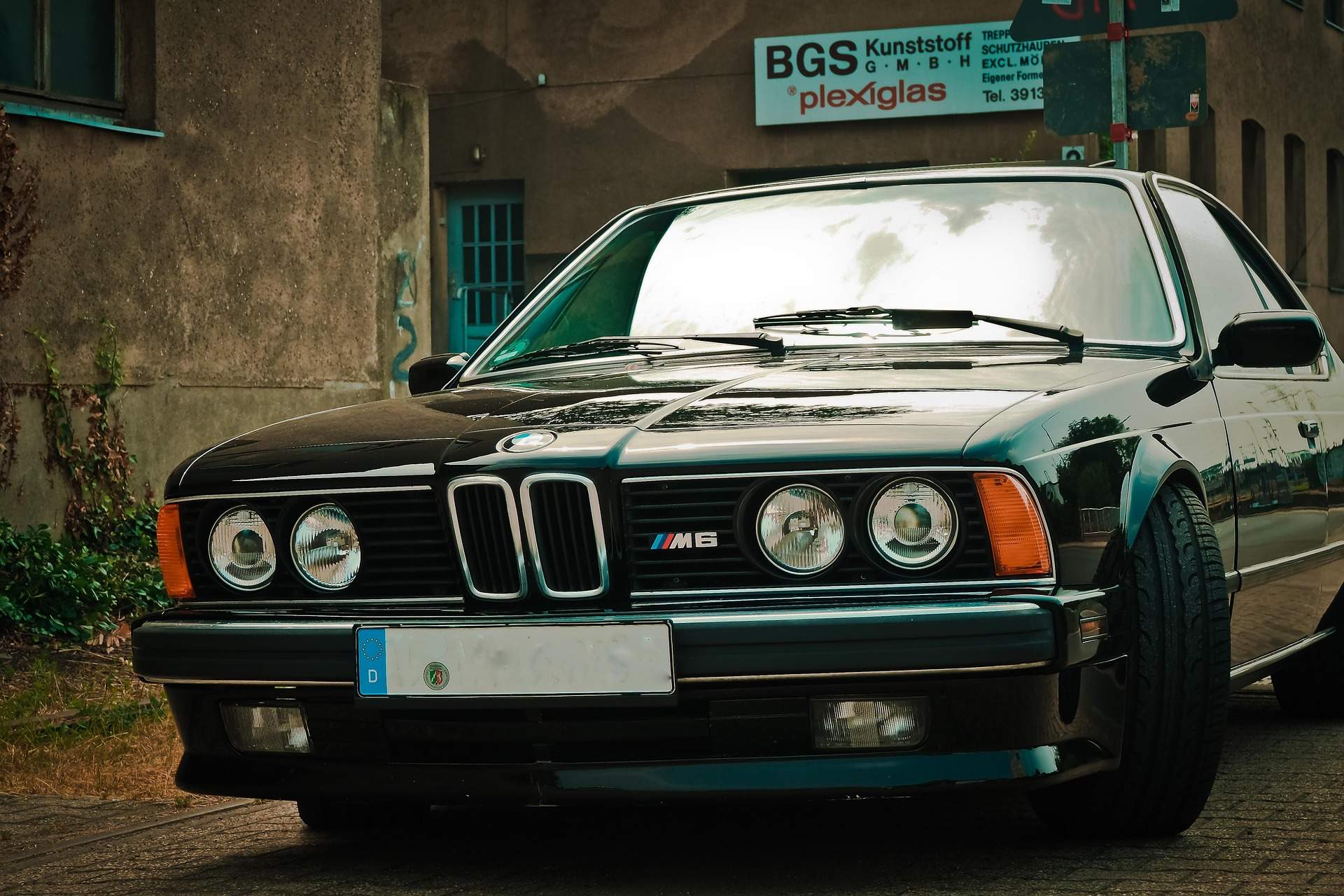
In the annals of automotive history, certain cars transcend mere transportation to become icons. The first-generation BMW M6, internally designated E24, is undoubtedly one such machine. This grand tourer fused the 6 Series’ luxurious comfort with the M division’s raw, motorsport-bred performance. Referred to as the “Shark,” the E24 M6 remains a highly sought-after classic, a testament to BMW’s “Ultimate Driving Machine” philosophy.
A Pedigree Forged in Motorsport: The Birth of the M635CSi

The story of the first M6 truly begins with the M635CSi. Introduced at the 1983 Frankfurt Motor Show, this European-market powerhouse was the M6’s direct and purer predecessor. BMW Motorsport GmbH, the same division responsible for the legendary M1 supercar, breathed life into the M635CSi.

At its heart lay the magnificent M88/3 inline-six engine, a derivative of the M1’s powerplant. This 3.5-liter masterpiece featured double overhead camshafts, four valves per cylinder, individual throttle bodies, and a sophisticated Bosch Motronic fuel injection system. The result was a formidable 282 horsepower and 251 lb-ft of torque, pushing the car from 0 to 60 mph in a blistering 6.2 seconds and achieving a top speed of 158 mph. This made it one of the fastest cars of its era, instantly cementing its performance credentials.
The American Dream: The Arrival of the M6

For the North American market, the M6 arrived in 1987, carrying the simplified “M6” badge. To comply with stringent U.S. emission standards, the American M6 featured a slightly different engine, the S38B35. Still a 3.5-liter inline-six, this modified 635CSi engine featured a lower compression ratio and catalytic converters. This resulted in a slightly reduced output of 256 horsepower and 243 lb-ft of torque.
Despite the power difference, the U.S.-spec M6 was still a formidable performer, achieving 0-60 mph in around 6.4 seconds and a top speed of 155 mph. It was also marginally heavier due to additional safety equipment like airbags and anti-lock brakes (ABS), which became standard. Regardless of the market, both the M635CSi and M6 shared a sporty chassis with stiffer suspension, larger brakes, a limited-slip differential, and a close-ratio five-speed manual transmission. These components were all designed to deliver an engaging driving experience.
Timeless Design: The E24’s Enduring Appeal
The E24 6 Series, on which the M6 was based, was a visual masterpiece penned by Paul Bracq. Its sleek, elongated silhouette, often characterized by the aggressive “shark nose” front end, exuded a timeless elegance that continues to captivate enthusiasts today. Unlike its E9 predecessor, the E24 incorporated a B-pillar, contributing to a more rigid structure and improved safety.

For the M6, subtle yet effective aerodynamic enhancements distinguished it from the standard 6 Series. These included a deeper front spoiler, a discreet rear spoiler, and in some instances, flared wheel arches. These elements, along with the iconic M badges, subtly hinted at the performance within, without being overly aggressive. The interior complemented this blend of luxury and sportiness, featuring Recaro sport seats, plush leather upholstery, a leather-wrapped steering wheel, and a driver-focused instrument cluster with essential gauges. Power windows, power sunroof, air conditioning, cruise control, and an onboard computer further enhanced the grand touring experience.
Driving Dynamics: A Mechanical Symphony (Journalist Perspectives)
Driving a first-generation BMW M6 (E24) offers a profoundly mechanical feel, a stark contrast to modern cars, as noted by contemporary and recent automotive journalists.
Car and Driver, in their July 1987 review, described the demanding engagement: “Put your right foot down, stir the gears as if you were churning butter, let the tach needle soar…”. They highlighted the clutch’s “weight and feel… just simply lacking in modern cars,” and while the five-speed manual had “ropey throws,” it remained precise.
The recirculating ball steering was lauded for its directness. Car and Driver stated, “The steering wheel sends orders with military precision… You know what this car is doing all the time, and it never threatens.” This direct feedback, though “proper heavy” at low speeds, built confidence at pace.
The M88/3 and S38B35 inline-six engines received universal acclaim as “a mechanical symphony” with incredibly linear power. Car and Driver enthused, “And that engine – oh, that engine. It’s incredible…. Throttle response is amazing; you don’t get reactions like this with a modern, single throttle-body drive by wire car.” They noted its transition from a “purring kitten” at idle to a “wonderfully urgent” sound, escalating to a “hoarse” roar at redline, “like someone accidentally stuffed an F1 engine into the hold.”
While not as nimble as dedicated modern sports cars, the M6’s revised suspension (from the E28 5 Series) ensured a composed ride and confident handling for a grand tourer. It was, as many remarked, “a true driver’s car,” encouraging spirited driving. Car and Driver summarized: “The M6 is happiest when you exercise it… something memorable happens at any speed.”
Rarity and the Collector’s Market
The first-generation M6 was a relatively exclusive vehicle. A total of only 5,855 units were produced worldwide between 1983 and 1989. Of these, approximately 1,767 units were shipped to North America as the M6. This limited production, combined with its strong performance, iconic design, and BMW M pedigree, has ensured its place as a desirable collector’s item.
Today, well-preserved examples command significant prices in the classic car market. Enthusiasts seek out cars with documented service history, original components, and minimal rust, which can be a common issue given the car’s age. Owners should be aware of potential maintenance points, including timing chain and tensioner wear, cooling system components, and suspension bushing degradation, all typical concerns for a classic of this vintage.
Legacy and Lasting Impact
The first-generation BMW M6 (E24) stands as a pivotal model in BMW’s M history. It demonstrated BMW’s ability to imbue a luxurious grand tourer with true motorsport DNA, creating a car that was both comfortable for long journeys and exhilarating on the open road. It paved the way for future M6 iterations and solidified the M division’s reputation for producing high-performance, driver-focused vehicles.

More than just a car, the BMW E24 M6 is a statement of an era – an era when automotive design prioritized elegance and a direct, unfiltered driving experience. Its “Shark” silhouette, potent inline-six engine, and engaging dynamics continue to charm and impress, ensuring its enduring status as one of BMW’s most iconic and beloved creations. For those seeking a blend of classic German engineering, understated luxury, and exhilarating performance, the first-generation BMW M6 remains an irresistible proposition.
You may also like:
- BMW 6-Series (E24) buying guide, history and review: An article with a detailed history and buying guide for the E24 6-series.
- BMW E24 M635 CSi Guide: A guide that provides an in-depth look at the M635CSi’s chassis, engine, and interior.
- The 1976–89 BMW 6 Series Coupe—aka the Shark—still has plenty of bite: An article that details the history and different versions of the E24 6 Series.
- BMW M6 – Wikipedia: The Wikipedia page for the M6, with details on the E24 M635CSi/M6 production and engines.
- Status-Seeking Missiles: The BMW E24 6-Series Coupes: A comprehensive history of the E24 6-series, including its design and market performance.


This is a great and enjoyable post about an enchanting car.
These sharks have aged well, haven’t they? Coming up on forty years and like fine wine. It’s instructive to read reviews of earlier 6-series products where the complaint was always that the engine didn’t have enough oomph. BMW sure as heck fixed that!
I wrote a blog post about the 1987 M6 back in 2021, when values for these cars were exploding. Recently updated, it’s here:
https://eightiescars.com/2021/07/04/1987-bmw-m6-coupe/
Tell me about it—these cars were so beautiful back then! A good friend of mine had one, and the acceleration on that car was so smooth; he even had a manual. Boy, I tell you, things have changed! I like the sharks better than the late models, and I also enjoyed the article you wrote.