

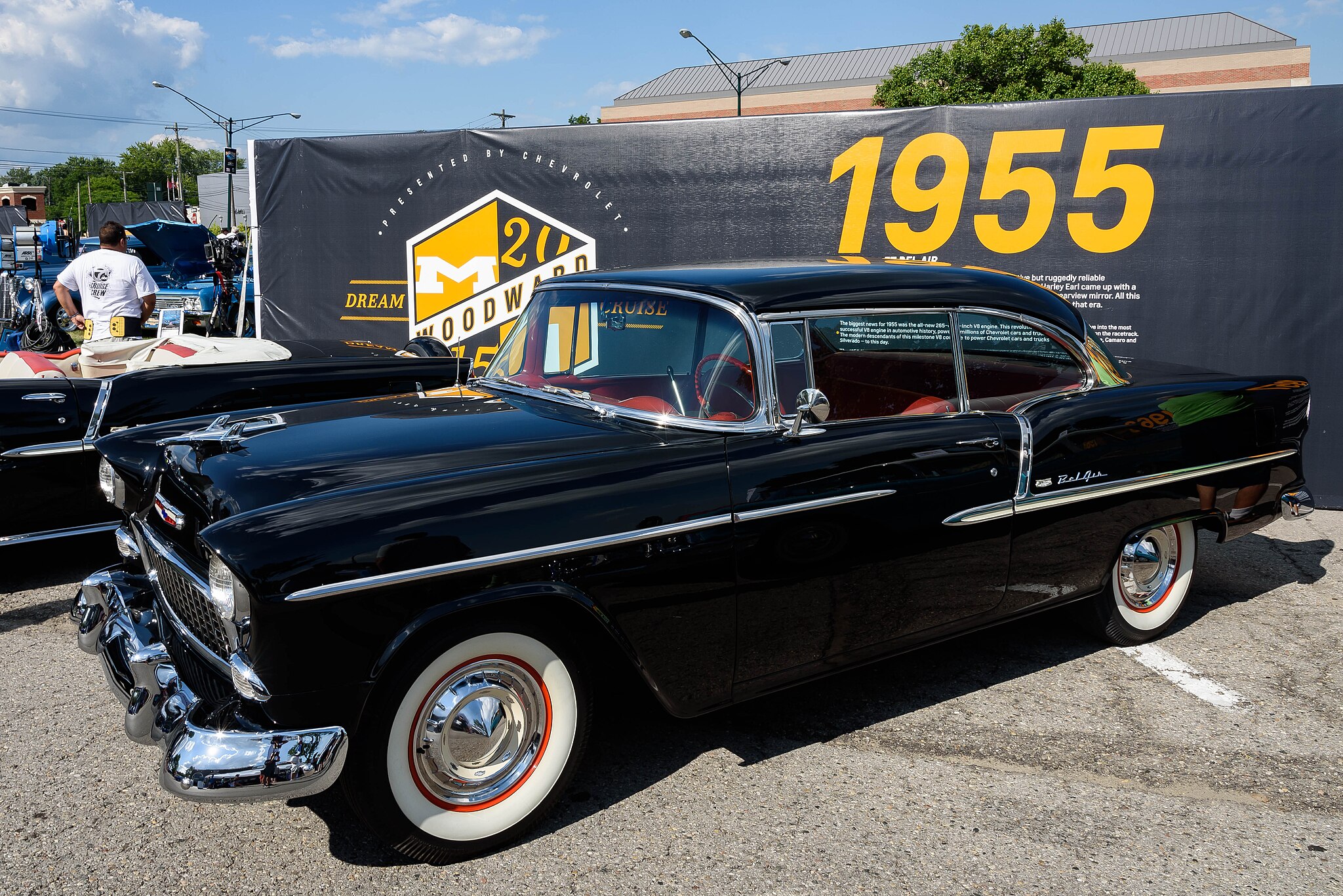

Featured Image by Mustang Joe on flickr.com
Introduction – “What Was Going On?”
The mid-1950s in America were a period of unparalleled economic expansion and cultural transformation. A sense of optimism, spurred by post-war industrial strength and a burgeoning middle class, defined the era, making it the perfect stage for a revolutionary new car. It was in this environment that the magnificent 1955 Chevrolet Bel Air was introduced, offering style, power, and affordability that captured the American spirit.
💵 Economy & Lifestyle
The mid-1950s in America represented a glorious high-water mark of prosperity, a time when the nation confidently shifted from post-war rebuilding into a new golden era of consumerism and cultural formation. Economic growth, fueled by industrial might and a dramatic surge in manufacturing, was robust; consequently, family incomes were rising quickly. Disposable income, which was at a post-war peak, empowered the burgeoning middle class to invest in lifestyle items, thereby replacing the austerity and scarcity of the war years with a new sense of abundance. Furthermore, suburbs were expanding rapidly, a phenomenon creating a critical need for efficient and stylish personal transportation. The family car evolved from a mere utility into a symbol of success and suburban convenience.
📰 News/Politics
This was a time of dynamic social change, significantly marked by the emergence of youth culture. On the national stage, the political climate was one of relative stability under President Eisenhower, yet underlying anxieties, such as the Cold War and the arms race, persisted, though they were often overshadowed by domestic optimism. Furthermore, the early Civil Rights Movement was gaining momentum, with landmark events like the Supreme Court’s Brown v. Board of Education decision setting the stage for decades of struggle and change. The growing connectivity of television began to shrink the country, broadcasting both news and cultural trends directly into American homes.
🎵 Music
Rock and Roll music, a rebellious and energetic sound, exploded onto the scene, fundamentally shifting the cultural landscape. Teenagers, suddenly possessing their own spending money and a taste for independence, began to establish their own trends, choosing this exciting new genre as their soundtrack. Elvis Presley became a ubiquitous star, his music and style embodying the era’s youthful energy and desire for freedom. Hit songs like Bill Haley & His Comets’ “Rock Around the Clock” cemented the genre’s dominance.
🎥 Movies/TV
Concurrently, film was a major cultural mirror, with movies like Rebel Without a Cause shaping the image of teenage independence and rebellion. These films often featured sleek, desirable cars. Television shows, including classics like The Ed Sullivan Show, began to define mass entertainment, offering a glimpse into a shared national culture. The growing popularity of drive-in theaters also emphasized the car’s central role in leisure and dating.
🏈 Sports
Sports, too, captured the nation’s attention: baseball remained the undisputed national pastime. However, the rise of televised games brought icons like Willie Mays and Mickey Mantle into every living room, boosting their celebrity status. In the NFL, the game was becoming more professional and competitive, adding to America’s entertainment options. Consequently, the automotive industry was poised to capitalize on this optimistic, spending-happy, and stylistically bold environment. Detroit realized that simply building functional cars was no longer enough; Americans wanted glamour, power, and a direct reflection of their prosperity—the all-new, revolutionary 1955 Chevrolet Bel Air.
Position the Car in Its Time
An Emblem of Post-War American Optimism

The 1955 Chevrolet Bel Air transcends its status as mere transportation; it stands as a powerful and enduring symbol of the post-World War II American landscape. This era was characterized by a burgeoning sense of optimism, consequently fueled by economic growth and a renewed focus on the future. The Bel Air, with its bold styling and aspirational features, perfectly mirrored this national mood of prosperity and progress. It wasn’t just a car, but a statement; rather, it was a rolling testament to the perceived limitless possibilities of the time. Its design and features reflected the increasing affluence and the desire for more comfort, style, and power in everyday life.
Fueling the Automotive Boom
The post-war economic boom provided a fertile ground for the automotive industry to flourish. Increased disposable income allowed more American families to purchase new vehicles. Thus, the pent-up demand from the war years translated into high sales figures for automakers. High consumer confidence made buying a new car, like the stylish Bel Air, a symbol of success. Furthermore, easy credit and installment plans further facilitated the acquisition of these coveted automobiles.
A New Era of Automotive Aesthetics
The 1955 Bel Air’s design radically departed from earlier models, embracing a flamboyant and expressive aesthetic. Sweeping lines and a lower, wider stance conveyed a sense of dynamism and forward momentum, mirroring the nation’s optimistic outlook. The generous use of chrome trim wasn’t just decorative; instead, it symbolized affluence and meticulous attention to detail. This style reflected a society that embraced ornamentation and visual appeal. Vibrant two-tone paint options allowed buyers to personalize vehicles and express individuality, underscoring the era’s increasing consumer choice. Notably, the distinctive “hatchet” side trim became an iconic element, instantly recognizable and synonymous with the Bel Air’s stylish presence.
The Iconic Hardtop’s Appeal
The introduction of the Bel Air hardtop coupe was particularly significant. Its sleek, open look mirrored a convertible’s, but without a soft top’s issues, perfectly balancing style and practicality. Immensely popular, this body style symbolized freedom and carefree cruising, resonating deeply with the era’s burgeoning youth culture. The pillarless design emphasized the car’s flowing lines, ultimately contributing to its sophisticated appearance, therefore making it a sought-after symbol of upward mobility.
The Nomad: Blending Style and Utility

The Chevrolet Nomad, a distinctive station wagon based on the Bel Air, further exemplified the era’s increasing focus on leisure and recreation. Its stylish design, with its sloping rear roofline and unique trim, set it apart from traditional station wagons. The Nomad catered to families with active lifestyles, suggesting a prosperity that allowed for leisure activities and the need for a vehicle that could accommodate them. It represented a blend of practicality and style, a hallmark of the Bel Air line’s appeal during this affluent period.
Enhanced Comfort and Convenience
The interior of the 1955 Bel Air represented a distinct move towards greater comfort and convenience for the average American driver. Spacious bench seats, often upholstered in attractive and durable materials, provided ample room for families. Moreover, the dashboard design was clean and functional, with an emphasis on ease of use and a more modern aesthetic compared to previous generations. The availability of options like power steering and power windows, while not standard, indicated a growing demand for and accessibility of features that enhanced the driving experience and added a touch of luxury.
Vehicle Performance
The introduction of the small-block V8 engine in 1955 was a pivotal moment in Chevrolet’s history. It was also a significant contributor to the Bel Air’s appeal. This new engine offered a significant increase in power and performance compared to the traditional inline-six, catering to a growing desire for more spirited driving. The availability of a V8 engine in a relatively affordable car like the Bel Air democratized performance and further solidified its image as a desirable vehicle. This engine became legendary, forming the foundation for Chevrolet’s performance heritage and influencing the automotive landscape for decades to come.
- Engine Options: 235 cu in I6 Blue Flame 265 cu in V8 Small-Block
- I6 Horsepower Range: 123 to 136 hp
- V8 Horsepower Range: 162 hp (base) to 195 hp (Super Power Pack, late-year)
- Transmission Options: 3-speed manual, 2-speed Powerglide automatic, Overdrive
- Wheelbase: 115 inches
- Curb Weight (V8 Hardtop Approx.): Approx. 3,250 lbs
- Passenger Capacity: 5 or 6 passengers (most body styles seat 6; convertible seats 5)
Journalist Reviews at the Time
Contemporary road tests praised the 1955 Chevrolet Bel Air for its improved power-to-weight ratio and balanced road manners. One period test driver noted, “The new small-block V8 has given Chevrolet the necessary muscle to compete with anyone, and it does so without compromising the smooth ride the brand is known for.” Another publication lauded the new chassis, stating, “It doesn’t just look modern; it drives modern. This is the first Chevrolet that truly feels like it belongs in the jet age.” The consensus was clear: the Bel Air represented a monumental leap forward for Chevrolet, blending performance with everyday usability.
Competitors
The 1955 Bel Air was released directly into the fiercely competitive low-to-mid-price segment. Its primary rivals were also undergoing significant redesigns, all vying for the affluent middle-class buyer.
Ford Fairlane

- Engine Options: 223 cu in I6, 272/292 cu in Y-Block V8
- V8 Horsepower Range: 162 hp (272 V8) to 198 hp (292 V8)
- Key Feature: Sleek, modern styling with the “Thunderbird look.”
- Passenger Capacity: 6 passengers
How the Fairlane Compared
The Ford was arguably the Bel Air’s closest rival, especially with the introduction of its own V8 engine. The Bel Air’s small-block, however, was generally considered a more technologically advanced and lighter design, giving the Chevy a performance advantage on the street.
Plymouth Belvedere

- Engine Options: 230 cu in I6, 241/260 cu in “Hy-Fire” V8
- V8 Horsepower Range: 142 hp to 177 hp
- Key Feature: Introduction of the new “Forward Look” styling by Virgil Exner.
- Passenger Capacity: 6 passengers (with 8-passenger seating optional on wagons)
How the Belvedere Compared
The Belvedere offered a solid V8, but the Bel Air’s styling was more radical and its V8 had better immediate performance potential. Plymouth’s design was perceived as more conservative, allowing the more stylish Bel Air to capture the attention of younger buyers.
Final Summary for Comparisons
The 1955 Chevrolet Bel Air often outperformed its direct competitors in the vital areas of acceleration and chassis dynamics. While both Ford and Plymouth offered V8 power, the Bel Air’s all-new, lighter small-block V8 proved easier to modify for the drag strip and became instantly favored by the burgeoning hot rod and racing communities.
Racing & Cultural Impact
NASCAR History
While the ’55 Bel Air was not a dominant force in NASCAR, it was highly visible and competitive. Chevrolet’s focus on the new V8 engine quickly trickled down to the racing circuit. In 1955, the car helped solidify the brand’s presence in the sport. Though Oldsmobile and Chrysler often took the championships, the Bel Air’s performance on the track proved the durability and speed of the new small-block V8. This racing exposure, though not always resulting in championships, successfully advertised the car’s power to the American public.
Street & Drag Racing Culture
The real impact of the 1955 Bel Air was made on the street and drag strips. The 265 V8 was immediately recognized by enthusiasts as a simple, durable, and highly tunable engine platform. The combination of a relatively light body and a powerful, easy-to-modify V8 made it the quintessential budget hot rod. Local drag strips across America filled up with Bel Airs, often known simply as “Chevy Tens” after their original price class. The car became synonymous with early American drag racing culture, providing the mechanical foundation for decades of performance modifications.
Pop Culture/Media Appearances
The 1955 Chevrolet Bel Air quickly transcended its role as a mere means of getting from point A to point B. Its striking design made it a natural fit for the burgeoning world of cinema. For instance, it appeared in numerous films, becoming a symbol of cool and classic Americana on the silver screen. It became deeply intertwined with the emerging rock and roll culture, often featured in song lyrics, album covers, and as the prized possession of young, rebellious figures. The Bel Air represented a sense of youthful freedom, individuality, and the excitement of a new era.
What It Means Today
Collector Value

Today, the 1955 Bel Air is highly sought after by collectors, with premium examples of the hardtop and convertible commanding substantial prices at auction. Its status as the foundational model of the iconic Tri-Five generation ensures its desirability. The Nomad, due to its unique styling and rarity, often commands the highest prices of all body styles. Furthermore, the availability of parts and the enduring popularity of the small-block V8 make restoration projects relatively accessible.
Enthusiast Following
The car maintains a massive and dedicated enthusiast following worldwide. Numerous clubs and national events, such as the Tri-Five Nationals, focus exclusively on the 1955, 1956, and 1957 Chevrolets. This robust community supports everything from concours-correct restorations to highly modified street rods, affectionately known as “restomods.” The Bel Air remains a symbol of an accessible classic, bridging the gap between show car and usable cruiser.
Legacy in the Muscle Car World

The 1955 Bel Air is rightfully considered the car that launched the muscle car era. By introducing a high-performance, overhead-valve V8 engine into an affordable, mass-produced car, Chevrolet inadvertently created the template for the entire genre. The small-block V8, born in the Bel Air, became the mechanical heart of countless high-performance vehicles for the next six decades, defining Chevrolet’s performance identity and fundamentally altering the landscape of American automotive power.
Conclusion
An Enduring Icon of 1955 Chevrolet Bel Air
In conclusion, the 1955 Chevrolet Bel Air remains a potent symbol of post-World War II American prosperity. Its design, features, and cultural impact all reflect the optimism, growing affluence, and forward-looking spirit of the time. It was a car that not only met the transportation needs of American families but also embodied their aspirations and dreams for a brighter future. The Bel Air’s enduring legacy as a classic car is a testament to its significance as a cultural touchstone and a tangible representation of a pivotal era in American history. It serves as a strong reminder of a time of economic growth, stylistic innovation, and a widespread belief in the American dream, forever etched in the annals of automotive history as a true icon of its age.
Here are some high-quality links that edify this article on the 1955 Chevrolet Bel Air
1955 Chevrolet Bel Air Specifications & Dimensions on ConceptCarz → good for dimensions, engine options, variations.
55-57 Chevy Specifications on TriFiveChevys (forum/reference) → production numbers, model breakdowns for the Tri-Five era.
1955 Chevrolet article on Wikipedia → overview of design/styling, introduction of the small-block V8, cultural significance.
1955 Chevrolet Full-Size Cars Fact Sheet on Over-Drive Magazine → very technical engine/gearbox overview, good for deep detail.
.jpg)
.jpg)