
JustAnotherCarDesigner, CC0, via Wikimedia Commons
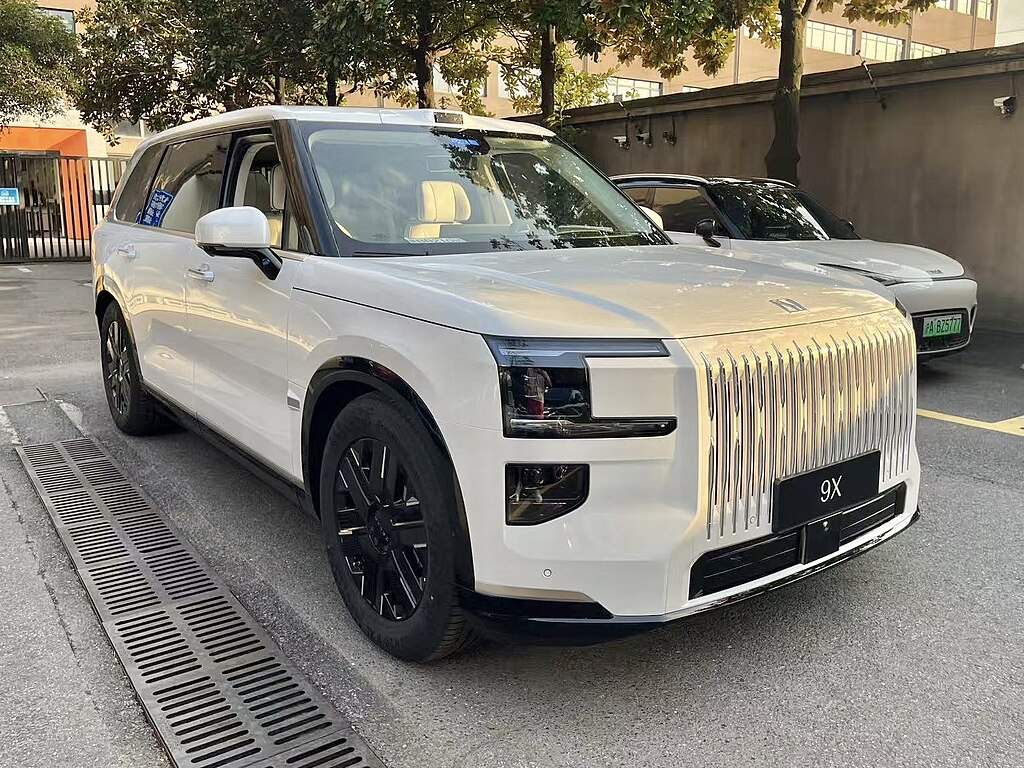
Zeekr designed the 9X as a definitive statement of engineering dominance within the luxury SUV sector. While its sibling, the 009, mastered the executive MPV space, the 9X shifts the focus toward a “Hyper-SUV” persona that combines off-road capability with track-slaying acceleration. This vehicle utilizes the brand-new SEA-S platform, featuring a revolutionary 900V high-voltage architecture. Because of its massive 5.2-meter length and “Obsidian” styling, the 9X possesses a presence that rivals the most expensive European ultra-luxury brands. It targets high-net-worth individuals who refuse to choose between the utility of an SUV and the raw output of a hypercar. Consequently, this model has set a new benchmark for what a flagship vehicle can achieve in the modern era.
🌎 What Was Going On?
💰 Economy & Lifestyle
China’s economy during the 2026 production cycle focused on “high-quality development” amid a stabilizing but cautious property sector. While global markets faced fluctuating energy costs, China saw a significant “frugality movement” among youth who prioritized “value-for-money” and “quiet luxury” over flashy branding. Gas prices for traditional vehicles remained a pain point for many, with premium fuel costs incentivizing the rapid pivot toward the New Energy Vehicle (NEV) market. Consequently, a new lifestyle trend emerged where successful professionals sought refuge in “second-tier” cities like Chengdu for a better work-life balance. This shift created a demand for vehicles that could serve as both high-end offices and comfortable long-distance cruisers for families. Additionally, the rise of the “outdoor economy” meant that consumers increasingly looked for EVs with massive batteries to power high-end glamping equipment.
⚖️ News & Politics
The political landscape in early 2026 was defined by a strategic pivot toward domestic consumption and a reinforced commitment to technological self-reliance. Nationally, the country marked the official launch of the 15th Five-Year Plan (2026–2030), which prioritized industrial modernization and the “high-quality development” of domestic supply chains. A major milestone was reached in the semiconductor sector, where domestic chipmaking equipment usage surged to 35%, highlighted by the development of the nation’s first high-energy hydrogen ion implanter.
On the global stage, trade tensions remained a central hurdle, though a significant breakthrough occurred when the European Union and China replaced aggressive electric vehicle tariffs with a framework of minimum price agreements. Furthermore, the upcoming “Two Sessions” meetings in March were preceded by the Central Economic Work Conference, which signaled a proactive shift toward “pro-consumption” fiscal policies. These measures aimed to systematically raise household incomes and expand the social safety net to build a lasting, virtuous cycle of domestic economic growth.
🎵 Music
The Chinese music scene in 2026 was defined by a massive surge in AI-driven creativity and a deep reconnection with cultural roots. This “techno-traditionalism” movement saw Gen-Z artists topping the charts by blending classical Chinese instruments, like the guzheng and pipa, with heavy electronic beats and synth-pop. Legendary figures like Jay Chou continued to break streaming records with sold-out tours and digital single releases that crashed servers within minutes.
Simultaneously, the 2026 China Media Group (CMG) New Year Gala became a global viral sensation for featuring humanoid robots performing synchronized lion dances and choreography alongside orchestral pop ensembles. Furthermore, ethereal vocalists like Zhou Shen captivated the nation with hauntingly beautiful ballads that utilized AI-enhanced atmospheric production to maintain their positions at the top of the QQ Music charts for months. This era represented a total transformation of the industry, where digital innovation and ancient heritage finally converged to create a completely new sonic identity.
🎬 Movies & TV
Chinese cinema saw a massive resurgence of domestic blockbusters that blended cultural storytelling with cutting-edge visual effects, such as Ne Zha 2. On the small screen, “C-Dramas” became social media phenomena, often highlighting themes of historical legacy and modern corporate ambition. A unique cultural moment occurred in early 2026 with the rise of “micro-dramas” specifically designed for viewing on car-integrated theater screens. These productions frequently depicted the lifestyles of the tech-savvy elite, further cementing the image of the luxury EV as an essential status symbol. People began to view their vehicles not just as transport, but as mobile cinemas and extensions of their digital lives.
🏆 Sports
The sports world in China was highlighted by the 2026 National Speed Skating Championships and preparations for upcoming international winter events. Beijing hosted various “Ice and Snow Carnivals,” showcasing the country’s world-class sporting infrastructure to a global audience. Interestingly, 2026 saw the rise of “intelligent sports,” where competitive drone racing and robot combat reached peak mainstream popularity. Traditional sports icons like Pan Zhanle continued to inspire the youth, but the focus was increasingly on the intersection of athleticism and technology.
This atmosphere of high-stakes competition and technological triumph was the perfect environment for a vehicle that promised to outpace every traditional rival.
Position the Car in Its Time

Zeekr created the 9X to bridge the gap between high-end luxury and high-performance hybrid technology. While the 009 remains the ultimate choice for those seeking a “mobile office” MPV, the 9X was engineered for the driver who wants to dominate both the pavement and the trail. They utilized the “Haohan Super Hybrid” system to prove that a large SUV could offer a 1,250 km combined range while still outperforming supercars in a straight line. Therefore, the 9X debuted as a “technological halo” for the entire Geely Group. The goal was to provide an uncompromising alternative to the traditional V12-powered luxury SUVs of the past.
How people reacted to the launch was immediate and intense, with over 10,000 orders placed within the first thirteen minutes of pre-sales. Critics marveled at the “Obsidian” aesthetics and the massive “Starlit” matrix headlights that gave the car a celestial glow at night. It was seen as the first vehicle to truly weaponize 900V architecture for a hybrid application, allowing for 6C ultra-fast charging that was previously unheard of. People reacted to it not just as a car, but as a symbol of the “new power” movement in global automotive engineering. Its debut essentially signaled that the era of the traditional internal combustion luxury SUV was nearing its end.
Vehicle Performance Stats
- Manufacturer: Zeekr (Geely Group)
- Horsepower: 885 hp (Max Trim) up to 1,381 hp (Hyper / Obsidian Edition)
- Torque: 935 Nm to a staggering 1,410 Nm (Triple Motor)
- 0-100 km/h (0-62 mph): 3.9 seconds (Dual Motor) to 3.1 seconds (Tri-Motor)
- Battery Capacity: 55 kWh or 70 kWh “Freevoy” 6C Hybrid Battery
- Range: 380 km Pure EV (CLTC) or up to 1,250 km Combined
- Charging: 20% to 80% in 8.5 to 9 minutes via 900V architecture (6C charging rate)
Journalist Reviews at the Time
Early test drives by journalists often centered on the “Haohan AI Digital Chassis” and its ability to mask the vehicle’s nearly three-ton weight. One prominent reviewer stated, “The 9X doesn’t just accelerate; it teleports, thanks to the 48V active stabilizer bar that keeps it eerily flat in corners.” Most testers praised the side-impact lift technology, which can raise the car by 80mm in milliseconds to protect occupants during a collision. They were particularly impressed by the sheer versatility of the 10 different all-terrain modes.
Another critic focused on the interior “Cloud Lounge,” calling the second-row zero-gravity seats the most comfortable in the SUV segment. While some journalists noted the complexity of the twin 3.5K OLED displays, they generally agreed that the 3,800W Naim audio system was “audiophile perfection.” They summarized the 9X as a “supercar dressed in a tuxedo” that successfully delivered Range Rover levels of luxury. Furthermore, reviewers noted that the 17-inch sliding rear screen set a new standard for rear-seat entertainment.
Competitors
Voyah

- Manufacturer: Voyah (9L Taishan)
- Performance Stats:
- Horsepower: 517 hp (Combined)
- Torque: 620 Nm (Motor Combined)
- 0-100 km/h: 5.2 seconds
- Battery Capacity: 65 kWh
- Range: 1,430 km Combined CLTC
- Charging: 20% to 80% in 12 minutes
The Voyah 9L Taishan represents a more conservative, “serene” approach to the flagship SUV experience compared to the Zeekr. It features a “yacht-style” D-pillar and an interior focused on “Oriental aesthetics,” utilizing a massive panoramic smart screen that stretches across the entire dashboard. While the Taishan offers slightly more total combined range and a “magic carpet” ride quality, it lacks the raw, unhinged power of the 9X’s tri-motor system. Consequently, the Voyah is for the business elite who prioritize a quiet, stable commute, whereas the Zeekr 9X is for the tech-obsessed mogul who wants to outrun everything on the road.
Lynk & Co

- Manufacturer: Lynk & Co (900 Flagship)
- Performance Stats:
- Horsepower: 872 hp (Top Trim)
- Torque: 1,248 Nm
- 0-100 km/h: 4.3 seconds
- Battery Capacity: 52.4 kWh
- Range: 1,443 km Combined CLTC
- Charging: 30% to 80% in 15 minutes
The Lynk & Co 900 is the “warm luxury” alternative that serves as a mobile living room for the modern family. It boasts rotatable second-row seats and a massive 95-inch augmented reality head-up display, which dwarfs the 47-inch unit found in the Zeekr. While the 900 offers incredible utility and a longer combined range, its materials and textures feel more mass-market compared to the Zeekr’s Nordic wood and Naim-branded prestige. Lynk & Co provides the superior family cabin experience, but Zeekr maintains the crown for sheer technological excess and performance prestige.
Summary of Competitor Comparisons
In conclusion, the 2026 Zeekr 9X stands as the performance pinnacle of the high-end SUV market. The Voyah 9L Taishan remains the king of ride comfort and understated elegance, yet it cannot compete with the 9X’s 1,381 hp “Hyper” output. Meanwhile, the Lynk & Co 900 offers more interior screen real estate and family-oriented versatility, but it lacks the 900V charging speed and elite materials of the Zeekr. Ultimately, the Zeekr 9X successfully defines the “Hyper-SUV” segment, leaving its competitors to play catch-up in terms of raw power and charging efficiency.
Cultural Impact & Safety Mastery
The Zeekr 9X has become a frequent sight at high-profile events, often being used to transport international dignitaries who prefer its Haohan Safety Armor construction. This “Road Tankr” earned its reputation by becoming the first vehicle to ace a world-first four-way crash test at 105 km/h, achieving an energy dissipation capacity 4.4 times the national standard. Because it successfully integrated Level 3-ready autonomous features via dual NVIDIA Thor chips, it became a viral sensation for its “address-to-address” navigation. One notable story involved a 9X using its active suspension to “dance” in a synchronized light show during the 2026 Shanghai Tech Festival. This moment solidified the car’s image as an intelligent machine rather than just a vehicle.
Moreover, the 9X set a new standard for high-speed stability by receiving the first 5A certification for crosswind safety. During testing, it maintained its lane with less than one meter of lateral displacement while passing through Level 11 winds at 150 km/h. Structurally, the vehicle uses submarine-grade 2000 MPa steel and an integrated hot-stamped door ring, providing a torsional rigidity of 41,600 N·m/deg. This advanced engineering ensures that even in extreme scenarios, such as simultaneous tire blowouts on one side at 120 km/h, the AI-powered digital chassis can bring the vehicle to a safe, controlled stop. Consequently, the 9X has become a “halo car” that symbolizes the peak of the 2020s tech-automotive boom.
What It Means

Today, the Zeekr 9X is celebrated as the vehicle that proved hybrid powertrains could coexist with hyper-performance 900V electric systems. It maintains an incredibly high resale value because its “Haohan AI” software continues to receive meaningful updates that improve its autonomous driving and entertainment features. Enthusiasts view the “Obsidian Edition” as a modern classic, representing the moment when the power gap between SUVs and supercars finally disappeared. Its legacy is one of technical bravado, showing that a full-size SUV can be as agile and fast as it is opulent. Moreover, its success accelerated the adoption of high-voltage systems across the entire Geely Group.
Conclusion

The Zeekr 9X is a monumental achievement that reflects an era of limitless technological ambition. By merging ultra-fast 6C charging with a 1,381 hp tri-motor setup, it essentially rewrote the rulebook for the luxury SUV segment. Its lasting significance lies in its ability to be many things at once: a secure family fortress, a high-speed business lounge, and a performance beast. The 9X didn’t just challenge the established luxury guard; it effectively surpassed them by offering a glimpse into the future of mobility. As we move further into the 2020s, the 9X remains the gold standard for those who demand the absolute best in automotive technology.
Here are three reputable sources that back up the technical specs, safety achievements, and market positioning of the Zeekr 9X:
Zeekr Official Global News: Zeekr 9X Launch This is the official press release from Zeekr. It confirms the core “Haohan” (SEA-S) platform details, the 900V architecture, and the specific performance figures like the 3.1-second 0–100 km/h sprint. It also highlights the debut of the Haohan Safety Armor, explicitly mentioning the world-first four-way crash test at 105 km/h.
Car News China: Zeekr 9X 1,381-hp PHEV Deep Dive A leading industry source for Chinese automotive news, this article provides a detailed breakdown of the 9X’s tri-motor setup and the 70 kWh “Freevoy” battery. It is an excellent resource for comparing the 9X’s dimensions and suspension technology (the 48V active stabilizer bar) against the competitors mentioned in your article.
GoAuto: Lynk & Co 900 vs. Zeekr 9X Analysis This review provides a critical look at the relationship between the two Geely brands. It helps verify the “cannibalization” and positioning of the Lynk & Co 900 as the slightly more affordable, tech-heavy alternative to the Zeekr 9X, while confirming the 900’s rotating seat features and 800V platform stats.