
Calreyn88, CC0, via Wikimedia Commons
Introduction:
The year 2022 was a turbulent period on the global stage, presenting a fascinating backdrop for any major debut. Consequently, the world was reeling from multiple unprecedented challenges when the HiPhi Z was first unveiled. It was a time of massive shifts and technological acceleration across every aspect of life. This context of uncertainty and innovation perfectly sets the scene for a car that aims to redefine the future of luxury travel.
🌎 The World Awaits: 2022 Context
💵 Economy & Lifestyle
In China, 2022 was defined by economic volatility and major internal shifts. The nation’s GDP growth was strong at 3.0%, but this was one of the lowest figures in decades, pressured heavily by continuous large-scale city lockdowns. Despite high investment in high-tech industries, which saw New Energy Vehicle (NEV) output soar by over 90.5%, urban youth unemployment reached troubling highs. Furthermore, domestic consumer prices remained stable, shielding citizens somewhat from the global inflation surge. The concept of “Common Prosperity” drove regulatory changes, while the housing market downturn and pressure on tech giants signaled a shift in economic priorities away from unchecked growth.
📰 News/Politics
Politically, 2022 was dominated by the steadfast and controversial adherence to the “Zero-COVID” policy. This involved rigorous mass testing, strict quarantines, and severe lockdowns in major centers like Shanghai, leading to widespread public frustration and impacting the national economy significantly. The year also featured the 20th National Congress of the Chinese Communist Party (CCP), which consolidated leadership. Geopolitical tensions were heightened by the unprecedented visit of U.S. House Speaker Nancy Pelosi to Taiwan in August, resulting in significant military exercises and a diplomatic crisis that dominated national headlines.
🎵🎥 Entertainment
In the entertainment world, Chinese cultural consumption remained robust despite cinema closures. The domestic film market, though affected by the pandemic, released many popular films, and American imports like Avatar: The Way of Water still found success. On streaming platforms, domestic series remained dominant. Musically, Jay Chou continued his reign, releasing Greatest Works of Art, and his legacy music filled the charts. Eason Chan’s song “Fearless Heroes” (“孤勇者”), the theme for the Chinese animation of Arcane, became a massive, widespread youth anthem.
🏅Sports
For sports fans, 2022 was highlighted by the Winter Olympics in Beijing, making the city the first ever to host both the Summer and Winter Games. This national spectacle underscored China’s athletic and organizational prowess on the global stage. Furthermore, the country celebrated the success of its athletes in international arenas, notably in combat sports like UFC, where Chinese champions like Zhang Weili maintained high visibility, inspiring a new generation of sports enthusiasts.
Through all this national flux—the economic recalibration, strict governance, and celebrated cultural moments—the concept of luxury travel was evolving rapidly. Traditional notions of status and performance suddenly needed to account for sustainability and advanced technology. This moment in history was not just ready for a new electric car, but it was actively waiting for a digital and futuristic grand tourer—it was waiting for the HiPhi Z.
Why the HiPhi Z Was Created

The HiPhi Z was born from the strategic vision of its manufacturer, Human Horizons, a Shanghai-based technology startup. The company’s goal was not merely to produce another electric vehicle, but to redefine premium smart all-electric mobility, targeting the high-end luxury segment in China and eventually, the global market. Human Horizons sought to combine cutting-edge technology—such as the robotic arm for the center screen and the advanced external LED displays—with luxury aesthetics, carving out a new niche they termed “TECHLUXE®.” Following the successful launch of their first flagship, the HiPhi X SUV, the Z was designed to be its “digital GT” counterpart, catering specifically to forward-thinking creators who value boundary-pushing design and unparalleled digital integration.
Launch Reaction
The reaction to the HiPhi Z was overwhelmingly characterized by awe at its futuristic design and technology. Journalists and enthusiasts noted that the car looked and felt like something “from 20 years in the future,” resembling a vehicle from a science fiction movie. Importantly, the production version successfully retained over 95% of the concept car’s dramatic features, addressing the typical skepticism surrounding concept vehicles. The high price point and the unproven nature of the new Chinese luxury brand led to a cautious but highly intrigued reception in global markets, where the design was heralded as a refreshing departure from established norms.
Design and Aesthetics:
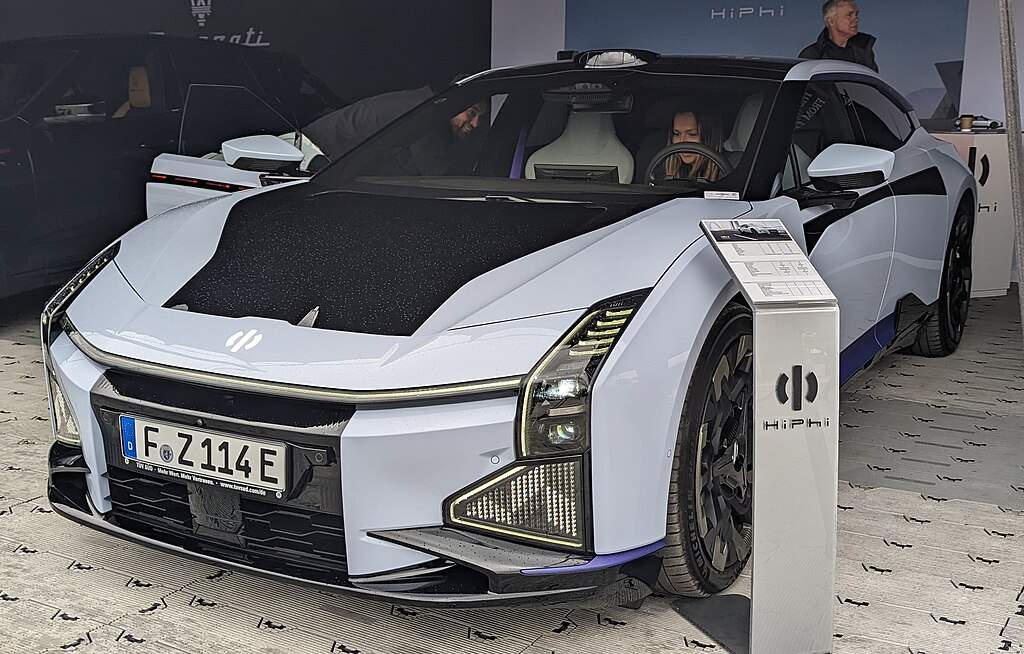
The HiPhi Z boasts a bold and futuristic design that’s sure to turn heads. Key design elements include:
- “Star-Ring ISD” Light Curtain: This innovative feature incorporates over 4,000 LEDs across the front and rear. These create dynamic lighting displays that can be customized and used for communication.
- Rear Suicide Doors: The rear doors open in the opposite direction, adding to the car’s unique and futuristic appeal.
- Sleek and Aerodynamic Profile: The HiPhi Z features a sleek and aerodynamic profile, optimizing both aesthetics and aerodynamics.

Technology and Features:
The HiPhi Z is packed with cutting-edge technology:
- Hesai’s AT128 LiDAR: Delivers superior 3D sensing, 200m range, and robust safety for advanced autonomous driving systems.
- HiPhi Bot: A unique robotic arm that controls the central display, adding a touch of futuristic flair to the interior.
- Luxurious Interior: The interior boasts high-quality materials, comfortable seating, and advanced technologies such as a high-resolution infotainment system and a premium sound system.

User Experience:
HiPhi prioritizes a seamless and intuitive user experience, evident in its carefully designed features. This includes personalized profiles that automatically adjust vehicle settings like seat position and climate for individual drivers. Voice control allows occupants to manage navigation, media, and vehicle functions hands-free, enhancing both safety and convenience. Furthermore, HiPhi builds a connected ecosystem that effortlessly integrates with other smart devices, extending your digital life from home to your car and making the vehicle an intelligent hub.
Performance and Range: More Than Just Show
Beneath its radical exterior and high-tech interior, the HiPhi Z delivers impressive performance. The primary variant features a dual-motor, all-wheel-drive setup, producing a formidable 672 horsepower (494 kW) and 820 Nm of torque. This propels the large GT from 0 to 100 km/h (0-62 mph) in a rapid 3.8 seconds, with a top speed of 200 km/h (124 mph).
Powering this performance is a substantial 120 kWh lithium-ion battery pack, providing a WLTP-rated range of approximately 555 km (around 345 miles). While fast charging capabilities are present at up to 150 kW, it’s not the fastest in the premium EV segment, but still practical for most journeys.
The HiPhi Z also prioritizes driving dynamics and comfort. It features an all-aluminum double-wishbone front suspension and a five-link rear, combined with air suspension and continuous damping control. Crucially, it incorporates rear-wheel steering, a feature that significantly enhances maneuverability. Despite its imposing length, the rear-steer system grants the HiPhi Z a turning radius comparable to a much smaller car, making city driving surprisingly agile.
List Direct Competitors
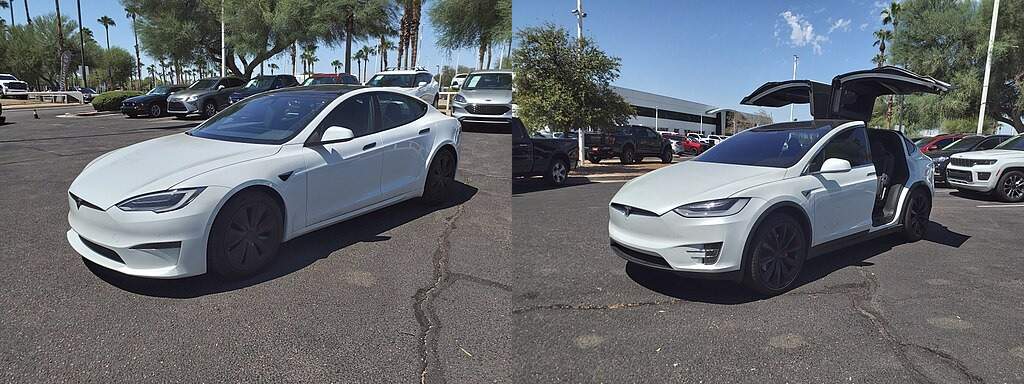
The HiPhi Z was positioned directly against the established performance electric flagships from global automakers. Direct competitors included the Tesla Model S, the Porsche Taycan, the BMW iX, and other domestic high-end Chinese EVs like the Nio ET7 and Zeekr 001.
Tesla Model S

Vehicle Performance Stats
- Manufacturer: Tesla
- Total Power (Dual Motor): Approximately 670 horsepower
- 0–100 km/h (0-62 mph): Approximately 3.2 seconds
- Battery Size (kWh): 100 kWh
Comparison
The Tesla Model S offers slightly superior acceleration and a lower curb weight, making it the quicker vehicle off the line. However, the HiPhi Z counters this advantage with a larger 120 kWh battery, potentially offering a greater maximum driving range in many configurations. Therefore, the Model S prioritizes raw acceleration; the HiPhi Z emphasizes battery capacity and digital extravagance.
Porsche Taycan GTS

Vehicle Performance Stats
- Manufacturer: Porsche
- Total Power: Approximately 590 horsepower
- 0–100 km/h (0-62 mph): Approximately 3.7 seconds
- Battery Size (kWh): 93.4 kWh
Comparison
The Porsche Taycan GTS, despite having less peak horsepower than the HiPhi Z, often demonstrates better performance in handling and real-world track scenarios. This is primarily due to its lighter weight and focused chassis tuning. The Taycan adheres to the classic German sports car formula. Conversely, the HiPhi Z employs complex digital and mechanical systems, like adaptive air suspension and active rear-wheel steering, to achieve impressive handling despite its size, emphasizing tech-driven control over traditional dynamics.
BMW iX M60

Vehicle Performance Stats
- Manufacturer: BMW
- Total Power: 455 kW (619 hp)
- 0–100 km/h (0-62 mph): 3.8 seconds
- Battery Size (kWh): 108.6 kWh (Gross)
Comparison
The BMW iX is the only competitor here positioned as a luxury SUV, directly appealing to buyers who value a higher driving position and added utility. The iX M60 matches the HiPhi Z’s blistering 3.8-second acceleration time. Nevertheless, the HiPhi Z provides a superior 120 kWh battery pack and a more aggressively futuristic, sedan-like design. The iX focuses on traditional German luxury and build quality, while the Z is fundamentally a digital status symbol.
Nio ET7

Vehicle Performance Stats
- Manufacturer: Nio
- Total Power: 480 kW (644 hp)
- 0–100 km/h (0-62 mph): 3.8 seconds
- Battery Size (kWh): 100 kWh (Standard Long Range)
Comparison
As a fellow Chinese flagship sedan, the Nio ET7 represents a direct domestic rival, achieving the same 3.8-second 0-100 km/h sprint. Its main innovation lies in its battery technology: the optional 150 kWh pack provides class-leading range, and Nio offers a battery swap service. However, the HiPhi Z stands out with its radical exterior design and unique active features like the robotic screen arm, appealing to consumers who prioritize maximum technological novelty over Nio’s more executive appearance.
Zeekr 001

Vehicle Performance Stats
- Manufacturer: Zeekr (Geely)
- Total Power: 400 kW (544 hp)
- 0–100 km/h (0-62 mph): 3.8 seconds
- Battery Size (kWh): 100 kWh
Comparison
The Zeekr 001 offers performance parity, matching the 3.8-second acceleration time despite its lower horsepower rating (544 hp vs. 672 hp). Furthermore, its body style is a practical shooting brake, giving it significantly more cargo space than the HiPhi Z. Consequently, the Zeekr 001 competes on practical performance and utility. The HiPhi Z offers a more luxurious, higher-powered grand tourer experience with its larger battery and more complex, showy technologies.
Summary of the Comparison
Ultimately, the HiPhi Z is the heavier vehicle compared to the Model S and the Taycan, which slightly impedes its ultimate dynamic agility. Nevertheless, it successfully distinguishes itself by focusing on a different interpretation of luxury. The HiPhi Z uses its superior battery capacity and extraordinary technology—such as the robotic screen arm and interactive exterior lighting—to appeal to a customer base seeking the most advanced, visually spectacular, and tech-loaded experience possible. It competes not just on speed, but on the sheer novelty and integration of its features. It offers more power and a larger standard battery than its domestic rivals, the Nio ET7 and Zeekr 001, making it the absolute maximum in Chinese EV extravagance.
What It Means Today
The legacy of the HiPhi Z is complex yet profound. It represents a bold and successful attempt by a Chinese startup to dominate the high-end electric luxury market, competing directly with established global giants. While the company’s subsequent financial difficulties have complicated its long-term market presence, the Z’s short but impactful run cemented its position as a technological pioneer.
The vehicle’s current collector value is speculative. As a technologically dense, low-volume EV from a financially turbulent company, it carries inherent risk. However, this same scarcity and radical design could make it highly desirable to a niche group of collectors in the future. Vehicles in near-new condition have appeared on the market at significantly reduced prices, attracting enthusiasts willing to take a risk on a groundbreaking piece of automotive engineering. The enthusiast following remains centered on the car’s unapologetically futuristic looks and its technological novelties, especially its ability to interact with the environment via lighting and its unique interior features. It is celebrated as one of the most daring designs of the 2020s.
Conclusion:
The HiPhi Z debuted into the economic turbulence of 2022, a time when the world was eager for distraction and fascinated by technology. Therefore, the car’s arrival was perfectly timed to capture the imagination of a tech-hungry luxury market. It leaves a lasting significance not for setting speed records, but for redefining the digital component of the Grand Tourer. The Z established a new benchmark for TECHLUXE®, proving that Chinese automakers could not only compete but could boldly lead in design and digital integration. It stands as a magnificent, albeit costly, testament to the moment electric vehicles stopped mimicking traditional cars and fully embraced their futuristic potential.