

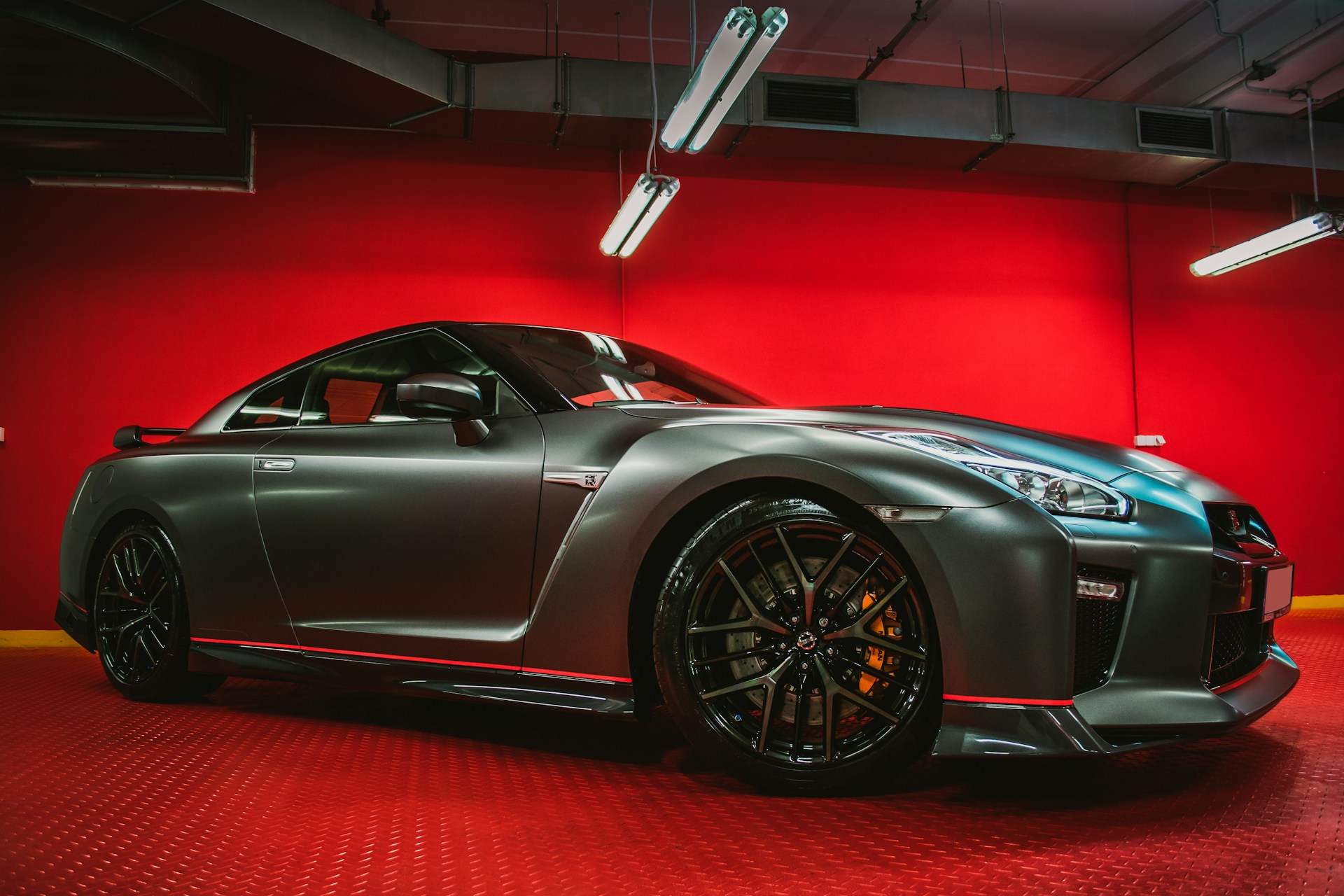

Featured Image by Patrik Ferro on Unsplash
Introduction – What Was Going On?
The mid-to-late 2000s in Japan represented a period of careful, technological resurgence. While the nation was still navigating the long-term, lingering effects of the “Lost Decades” that followed the economic bubble burst of the 1990s, there was a palpable sense of renewed focus on innovation and global competitiveness. This domestic backdrop—a blend of economic caution, high-tech ambition, and deep cultural reverence for mechanical precision—created the definitive context for a new national engineering icon to emerge. This created the perfect environment for the Nissan GT-R R35 to launch as a technological flag-bearer.
The car was not just an evolution of the iconic Skyline; it was a mission by Nissan’s most dedicated engineers to demonstrate that Japanese precision and digital management could create the ultimate global performance machine. The domestic audience, steeped in a rich history of tuner culture and motorsport dominance, was ready to embrace a new, powerful iteration of Godzilla, which provided the initial launching pad for its global shockwave.
💵 Economy & Lifestyle
The economy in the mid-2000s was characterized by a modest recovery, yet public concern persisted over structural issues like deflation and a rapidly aging population. Consequently, consumer trends began to shift away from the extravagant spending of the bubble era toward more strategic, value-conscious consumption. Nevertheless, Japan remained a global leader in high technology; this was an era defined by advanced mobile phone use (known as keitai culture), cutting-edge digital music players, and widespread integration of robotics into daily life. Youth culture maintained a strong, vibrant connection to domestic automotive customization and racing games, passed down from the previous generations.
📰 News/Politics
Politically, the period saw leadership transitions and continued efforts to stimulate the economy after the recessionary years. In particular, the government was focused on boosting Japan’s position in the globalized market and navigating rising diplomatic tensions with neighboring countries over historical and territorial issues. At this time, national pride and identity were closely tied to technological and engineering superiority. Public discourse was frequently centered on balancing traditional cultural values with the need for modern international influence and innovation to lead a stable future.
🎵 Music
The Japanese music scene was dominated by major pop acts and complex, highly produced genres. Artists like Arashi, Hikaru Utada, and Kumi Koda saw massive success, often tying into popular television drama soundtracks. Concurrently, the indie and rock scenes, featuring groups like BUMP OF CHICKEN and UVERworld, blended digital sounds with dynamic performances. The production quality of Japanese music during this time reflected the nation’s overall focus on polished, precise, and technologically sophisticated output.
🎥 Movies/TV
Japanese television dramas (dorama) remained hugely popular, often driving national cultural trends and fashion. Specifically, shows with themes of perseverance, strong bonds, and professional competition captivated audiences. The global influence of Japanese media, particularly anime and video game franchises like Final Fantasy and Metal Gear Solid, was immense, celebrating high-tech narratives, complex world-building, and masterful Japanese design on an international stage.
⚾ Sports
The sports world celebrated Japanese athletes making major international impacts. Baseball remained the dominant spectator sport, with players achieving high-profile success in Major League Baseball (MLB) in the United States. Furthermore, domestic motorsports maintained a passionate following, especially the Super GT Series, which was the pinnacle of high-tech road racing in Asia. The 2007 season, in particular, was a tightly fought battle between the major Japanese manufacturers, with the highly advanced Honda NSX taking the championship that year. The stage was set for the next generation of domestic performance cars to prove their s mettle.
The stage was set: against this backdrop of domestic engineering pride, technological advancement, and a powerful legacy of performance, Nissan was ready to unveil its ultimate champion. Developed in absolute secrecy over years, the Nissan GT-R R35 made its long-awaited debut, instantly sending a shockwave through the global automotive market and announcing that the era of Japanese supercar dominance was back.
Position the Car in Its Time

Why Nissan Developed the GT-R
Nissan built the GT-R R35 to be the fastest, most advanced street car. Consequently, Nissan’s engineers, led by Kazutoshi Mizuno, abandoned the Skyline badge to relaunch the car as a global flagship model, free from its past constraints. Engineers built it to hunt and surpass rivals like the Porsche 911 Turbo and the Ferrari F430. They achieved this by leveraging a radical, computer-managed all-wheel-drive system (ATTESA E-TS Pro) and an advanced dual-clutch transmission. The mission was to democratize supercar performance, making world-beating speed accessible to a wider audience.
How people reacted to it at launch
The reaction was one of shock and immediate controversy. Initially, the automotive world was skeptical of a heavy, computer-controlled Nissan claiming times that shamed lighter, more powerful, and far more expensive cars. Its incredible 7:38 Nürburgring lap time crushed rivals, earning the “Godzilla” nickname. Enthusiasts lauded the sheer, repeatable performance, while traditionalists criticized its reliance on complex electronics, famously nicknaming it a “PlayStation” car. Nonetheless, the debate cemented its status as an instant legend.
Vehicle Performance Stats
- Engine: Twin-Turbocharged 3.8L V6 (VR38DETT)
- Horsepower (Launch Era): 480 hp @ 6400 rpm
- Torque (Launch Era): 434 lb-ft @ 3200-5200 rpm
- 0–60 mph (Tested): Approx. 3.3 seconds (with Launch Control)
- Top Speed: 193 mph
- Drivetrain: ATTESA E-TS Pro All-Wheel Drive
- Transmission: 6-speed Dual-Clutch (Rear Transaxle)
- Curb Weight: Approx. 3,836 lbs
Evolution Through the Years (2007–2025)
The R35 remained in production for nearly 17 years—a rarity in modern automotive history. To illustrate, Nissan continuously refined the platform with software updates, chassis tweaks, and improved interior materials throughout its life. This steady evolution kept the GT-R competitive against rivals that received complete redesigns.
Notable Milestones:
- 2007 – Launch Model
- Power Output: 480 hp
- Notes: Japan debut
- 2009 – U.S. Release
- Power Output: 485 hp
- Notes: First global GT-R
- 2013 – Track Edition
- Power Output: 545 hp
- Notes: Lighter, stiffer setup
- 2017 – Facelift
- Power Output: 565 hp
- Notes: Interior overhaul
- 2021 – GT-R NISMO
- Power Output: 600 hp
- Notes: GT3-inspired performance
- 2025 – Final Model
- Power Output: 600 hp
- Notes: End of R35 production
Each iteration sharpened performance while retaining the GT-R’s core identity: brutal acceleration, AWD grip, and everyday drivability.
Journalist Reviews at the Time
Contemporary journalists were effusive, often focusing on the car’s astonishing ability to defy physics and democratize supercar performance. A summary of period test drives frequently noted how the advanced computers and all-wheel-drive system made even an average driver feel heroic. The consensus was that the car’s high-tech, digital-interface approach to performance was a genuine game-changer. “The Nissan’s bite is every bit as angry as its visual bark,” wrote Autoblog in an initial review. Another widespread opinion, famously championed by MotorTrend, which crowned it the 2009 Car of the Year, was that the R35 was a “supercar killer” that offered unbeatable performance value. Its on-track capability was praised, even if the ride quality was described as firm, underscoring its relentless focus on speed and grip.
Competitors
List direct competitors that defined the high-performance benchmark in the GT-R’s launch era (Technological Rivals, Track Supremacy, and Value Kings).
Porsche 911 Turbo (997)

- Engine: 3.6L Twin-Turbo Flat-Six
- Horsepower (Launch Era): 480 hp
- Torque (Launch Era): 460 lb-ft (with Overboost)
- 0-60 mph: Approx. 3.7 seconds
- Drivetrain: All-Wheel Drive
- Curb Weight: Approx. 3,495 lbs
- Nürburgring Time (Approx.): 7:38
The Porsche 911 Turbo was the GT-R’s primary global benchmark and rival. Specifically, the GT-R was engineered to challenge the 911 Turbo’s status as the ultimate all-weather performance machine. While the Porsche offered similar horsepower and torque, the Nissan undercut its price by a significant margin, essentially offering comparable performance for half the cost. Crucially, the GT-R’s 7:38 Nürburgring time was a direct assault on the Turbo’s reputation, matching the Porsche’s 7:38 Nürburgring performance benchmark on the world’s most difficult track. Therefore, the GT-R instantly became the more democratized choice, offering comparable track performance for far less money, though the Porsche maintained a premium reputation and a lighter overall feel.
Chevrolet Corvette Z06 (C6)

- Engine: Naturally Aspirated 7.0L V8 (LS7)
- Horsepower (Launch Era): 505 hp @ 6,300 rpm
- Torque (Launch Era): 470 lb-ft @ 4,800 rpm
- 0–60 mph (Mfr. Claim): Approx. 3.7 seconds
- Top Speed: 198 mph
- Drivetrain: Rear-Wheel Drive (RWD)
- Curb Weight: Approx. 3,130 lbs
- Nürburgring Time (Official): 7:42.99
The Corvette Z06 was a traditional, raw American powerhouse, offering a significant power advantage and a far lighter curb weight thanks to its immense naturally aspirated V8 and carbon-fiber components. However, the Z06 relied exclusively on rear-wheel drive, making it a more challenging and less forgiving car to drive at the limit compared to the GT-R’s digitally managed all-wheel-drive system. Thus, while the Z06 could match the GT-R’s straight-line speed, the Nissan’s stability and technology gave it the edge in everyday usability and track confidence for non-professional drivers. Crucially, the performance rivalry was instant: the GT-R’s initial Nürburgring time of 7:38 was quicker than the Z06’s 7:42.99, immediately cementing the GT-R as a high-tech challenger. On the drag strip, the GT-R’s launch control gave it the edge in the 0-60 mph sprint, but the Z06’s superior power-to-weight ratio often delivered a higher trap speed at the end of the quarter-mile.
Audi R8 (V8)

- Engine: 4.2L Naturally Aspirated V8
- Horsepower (Launch Era): 420 hp
- Torque (Launch Era): 317 lb-ft
- 0-60 mph: Approx. 4.4 seconds
- Drivetrain: Quattro All-Wheel Drive
- Curb Weight: Approx. 3,605 lbs
- Nürburgring Time (Tested): 8:04
The Audi R8 competed with the GT-R on exotic looks and mid-engine layout, instantly placing it in the upper echelon of the supercar market. Nonetheless, its naturally aspirated V8 was significantly down on power and torque compared to the GT-R’s twin-turbo V6, resulting in slower acceleration figures. Moreover, the R8 focused heavily on premium materials and styling. The GT-R, by contrast, focused solely on outright, world-beating performance, making it the objectively faster car on the track despite the R8’s dramatic curb appeal. In comparison, the R8’s tested Nürburgring time of approximately 8:04 demonstrated a substantial performance gap, showing the GT-R was focused purely on outright speed rather than accessible exotic style.
How the GT-R Compared (Summary)
The Nissan GT-R’s engineering philosophy—dubbed “Supercar for anyone, anywhere, anytime”—ensured its dominance in several key areas. For instance, in a straight-line acceleration comparison, the GT-R’s electronically-managed launch control allowed it to achieve 0-60 mph times that consistently bested its much more expensive competitors, a shocking feat that gained it instant notoriety on drag strips. The car’s sophisticated all-wheel drive and chassis tuning were perfectly suited for the track, where its initial 7:38 Nürburgring lap time stood as a crucial benchmark. This time essentially matched the performance of the far more expensive Porsche 911 Turbo (7:38) and significantly beat the powerful, yet RWD-focused, Corvette Z06 (7:42.99). More dramatically, the GT-R was nearly half a minute faster than the luxurious Audi R8 V8 (Approx. 8:04), proving that the Nissan could deliver exotic-slaying performance for a fraction of the cost, validating its technological superiority in the modern performance world.
Racing & Cultural Impact
Major Circuit Racing & Championships

The R35 GT-R’s professional racing career was defined by dominance in global and Japanese GT racing. For instance, the car was immediately successful in the prestigious Japanese Super GT Series (GT500 class), securing the drivers’ championship in its debut season in 2008 and going on to win multiple titles (2008, 2011, 2012, 2014, 2015). Crucially, the GT-R achieved a historic victory at the 2015 Bathurst 12 Hour with the NISMO GT3-spec car, marking the nameplate’s first overall win at Mount Panorama since the R32’s dominance in the early 90s. Furthermore, the R35 secured the 2011 Drivers’ Championship in the top-tier FIA GT1 World Championship. These track victories provided empirical proof that the production car’s engineering philosophy—led by NISMO’s racing development—was world-beating.
Street & drag racing culture

The GT-R quickly became an icon on the street and drag strips. Specifically, its highly tunable VR38DETT engine and robust drivetrain meant that with simple modifications, it could easily surpass 600 hp, making it a formidable street-racing weapon. The car’s reputation for having a “cheat code” launch button made it the perfect tool for stoplight sprints. It was an immediate cultural symbol of attainable, high-tech speed, a successor to the legendary Japanese tuner cars of the 1990s.
Pop culture/media appearances
The GT-R’s influence quickly moved into pop culture. It was heavily featured in the Fast & Furious franchise, most notably with Paul Walker’s character driving an R34 and the R35 itself appearing later, cementing its status as a screen star. This movie presence, combined with its constant domination in video games like Gran Turismo and Forza, made it instantly recognizable to a global, youthful audience. The aggressive, angular styling and sheer presence of the car ensured it stood out in music videos and television shows, symbolizing raw, digital-era power.
What It Means Today
Collector Value
Early model R35 GT-Rs are beginning to see their values appreciate, particularly low-mileage examples and special editions. Consequently, the initial depreciation common for high-tech vehicles has slowed significantly, as collectors recognize its pivotal role as the first-generation Godzilla to go global. Its historical significance as a benchmark-setting performance car ensures a stable, dedicated collector market.
Enthusiast Following
The enthusiast following for the GT-R remains incredibly strong. The aftermarket tuning scene is arguably the most vibrant and powerful of any modern supercar platform. In short, the R35 community is defined by continuous improvement, with owners constantly chasing new power records and track times. Its reputation as a highly tunable, reliable, and brutally fast machine ensures its legendary status among gearheads worldwide.
Legacy in the Performance World
The GT-R’s most significant legacy is its role as the ultimate technological disruptor. It permanently changed the definition of a supercar by proving that advanced digital engineering could reliably deliver performance previously reserved for the analog elite. It forced competitors like Porsche, Chevrolet, and Ferrari to accelerate their own efforts in dual-clutch transmissions, advanced all-wheel-drive systems, and digital vehicle dynamics, ensuring the GT-R R35 will forever be remembered as the car that dragged the supercar world into the modern, digital era.
Conclusion

The Nissan GT-R R35 arrived at a pivotal moment, just as the world grappled with economic uncertainty and embraced the digital revolution. Through its introduction, it not only honored the legendary Skyline lineage but redefined it, becoming the first true “Supercar for anyone, anywhere, anytime.” The immediate and intense competition with established rivals, highlighted by its 7:38 Nürburgring time and drag strip dominance, validated its radical engineering. Its lasting significance is clear: the GT-R R35 is a modern legend, a digital champion that used technology to democratize hypercar performance, cementing its place as an unshakeable icon in the performance world.


.jpg)

