
Featured Images are from HJUdall, CC0, via Wikimedia Commons
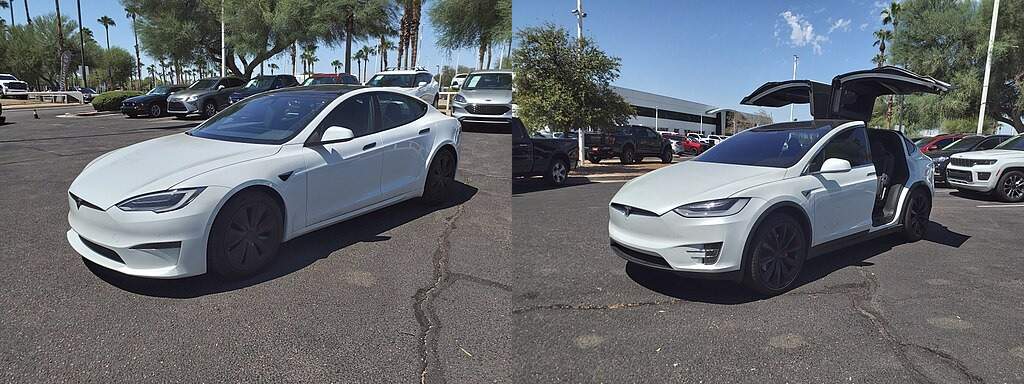
The automotive landscape changed forever this week. Specifically, CEO Elon Musk confirmed that Tesla will discontinue the Model S and Model X. This announcement occurred during the Q4 2025 earnings call on January 28, 2026. Musk described the move as an “honorable discharge” for the company’s longest-running vehicles. Consequently, production will officially cease by the end of the second quarter of 2026. This decision signals a fundamental shift in Tesla’s corporate identity. Instead of luxury cars, the firm is now betting its future on humanoid robotics.
Initially, the Model S served as the primary catalyst for the electric vehicle revolution. It proved that sustainable cars could offer world-class performance and luxury. Furthermore, the Model X introduced radical features like falcon-wing doors to the mainstream SUV market. These models established Tesla as a premium brand with a massive technological lead. However, the global market has evolved significantly since their respective launches in 2012 and 2015. Modern buyers now prioritize mass-market affordability and advanced autonomy. Therefore, the removal of these flagship models represents a necessary evolution.
The Brutal Sales Data of 2025
We must examine the financial numbers to understand this drastic pivot. The year 2025 proved to be a brutal period for Tesla’s high-end lineup. In fact, Model S deliveries plummeted by a staggering 52% last year. The luxury sedan market is shrinking as consumers shift toward more versatile crossovers. Meanwhile, the Model X also suffered a 34% decline in global sales volume. These legacy models combined to represent only 3% of total deliveries in 2025. Conversely, the Model 3 and Model Y accounted for nearly 97% of the company’s output.
Specifically, Tesla delivered only about 30,000 units of the S and X globally in 2025. This low volume made it impossible to justify the massive production space in California. Furthermore, the Fremont factory can produce 100,000 of these vehicles annually. Running the lines at less than 30% capacity created a significant drain on resources. Consequently, the leadership team decided that a total shutdown was the most logical path. Analysts initially reacted with skepticism, but many now recognize the efficiency gains. Clearly, Tesla can no longer support low-volume legacy projects.
Why Robotics Trumps Luxury Sedans

We should ask why Tesla is abandoning a proven luxury segment for robotics. The answer lies in the sheer scale of the potential market. A luxury car appeals to a very narrow demographic of high-net-worth individuals. In contrast, a general-purpose robot could serve every industry and household on Earth. Musk frequently claims that 80% of Tesla’s long-term value will come from the Optimus program. Consequently, the engineering talent previously assigned to the Model S is now focused on robotics. This shift allows for faster iteration of the robotic “brain” and sensor suite.
Furthermore, the profit margins on robotics are expected to exceed those of traditional cars. Standard automotive manufacturing involves thin margins and extremely high overhead costs. Conversely, a humanoid robot acts as a software-driven platform that receives constant updates. Tesla plans to sell Optimus units for between $20,000 and $30,000 each. This price point makes the technology accessible to a vast range of businesses. If Tesla reaches its goal of mass production, the revenue potential is truly immense. Therefore, the retirement of the S and X is a calculated trade-off for growth.
Financial Realities: The 2025 Revenue Decline
The financial landscape of 2025 forced Tesla’s hand in several ways. For the first time in fifteen years, the company reported a year-over-year revenue decline. Specifically, annual income dropped by 3% to approximately $94.8 billion. This contraction stemmed from aggressive price cuts on the Model 3 and Model Y. Furthermore, the automotive revenue segment alone fell by 11% compared to 2024. These figures highlight the intense pressure from global competitors like BYD. Tesla needed a bold new strategy to regain investor confidence.
Additionally, net income hit a five-year low during the final quarter of 2025. The company’s overall operating margin contracted as research costs for AI skyrocketed. Tesla is spending billions on massive supercomputer clusters and battery development. Meanwhile, the legacy architecture of the Model S and X became increasingly expensive to maintain. These cars use older 12-volt systems that are becoming obsolete. Updating them to modern standards would require a massive capital investment. Consequently, cutting the models allows the company to reduce its fixed overhead significantly.
The Fremont Factory Transformation

The most significant part of this announcement involves the Fremont facility. Tesla plans to convert the Model S and Model X assembly lines immediately. Instead of luxury cars, this floor space will produce the Optimus humanoid robot. Musk targets a production rate of one million robots per year from this site. This transformation marks the end of traditional car assembly for those specific sections. Specifically, the “S3XY” era is making way for a future defined by artificial intelligence. Employees will undergo extensive retraining to handle the new robotics assembly process.
Moreover, the Optimus Gen 3 is already entering mass production in early 2026. This robot features incredible precision with 22 degrees of freedom in its hands. It can perform delicate tasks that were previously impossible for machines. For example, the robot can now handle factory components and even sort inventory. Tesla believes that humanoid labor will eventually become its primary source of income. By repurposing the S and X lines, the company gains instant manufacturing capacity. This move allows Tesla to avoid the long process of building a new factory.
Legacy vs. Innovation: The Technical Debt
Another critical factor in this discontinuation is the engineering gap. Newer Tesla products like the Cybertruck utilize a revolutionary 48-volt architecture. This system reduces the weight of the vehicle and simplifies the electrical complexity. In contrast, the Model S and X are built on platforms that are over a decade old. Specifically, they require thousands of feet of traditional copper wiring. Transitioning these older models to the 48-volt standard was deemed too difficult. Tesla prefers to focus on a clean slate for its next generation of transport.
Furthermore, the “Unboxed” manufacturing process is the new company standard. This method allows different sections of a car to be built simultaneously in sub-assemblies. The Model S and X were designed for a traditional linear assembly line. This old-school approach creates bottlenecks and limits the total factory throughput. By removing these models, Tesla can modernize the entire Fremont facility layout. Ultimately, the company wants every product in its lineup to be optimized for automation. The aging flagships simply did not fit into this high-efficiency vision.
The Rising Shadow of Global Competition
The rising shadow of global competition cannot be ignored in this strategic shift. Tesla’s Model S has faced declining sales as a growing number of luxury EV rivals, including Lucid and Porsche, attract premium buyers; Lucid’s Air has been praised for its long range and strong luxury credentials, while Porsche’s Taycan remains a highly respected performance-oriented EV. As Tesla faces intensifying competition across both luxury and mass-market segments, and with Model S and Model X production set to end, the company appears to be reprioritizing toward areas such as its more affordable models and advanced autonomy and robotics initiatives rather than doubling down on a traditional high-end niche.
Specifically, the threat from China’s BYD has become a primary concern for the company. BYD officially became the world’s largest electric carmaker during the 2025 calendar year. The Chinese giant produces high-quality vehicles at costs that Tesla cannot easily match. Furthermore, BYD’s vertical integration gives it a massive advantage in battery supply. Tesla’s response is to move “up the stack” into more complex AI technologies. By abandoning the low-volume luxury sedan, Tesla can focus on its affordable $25,000 vehicle.
The Autonomous Future and SaaS Revenue
Tesla’s roadmap now revolves almost entirely around full autonomy. The upcoming “Cybercab” will feature no steering wheel or physical pedals. This vehicle represents the ultimate expression of Tesla’s software-first manufacturing approach. Because the Model S and X were designed for human drivers, they are now “transitional” technology. Musk believes that the era of owning a personal luxury sedan is fading. Instead, he envisions a world of shared, autonomous transport networks. Consequently, the company is shifting its engineering focus toward the Cybercab.
Furthermore, the active Full Self-Driving (FSD) subscriber count reached 1.1 million in 2025. This recurring revenue is far more valuable than one-time vehicle sales. Tesla earns nearly $100 million in profit every month from these software subscriptions. The older sensors in some Model S and X units struggle to run the latest neural networks. By standardizing the fleet on the latest hardware, Tesla ensures a consistent user experience. Therefore, the company is sacrificing its oldest models to build a cohesive ecosystem.
Impact on Current Owners and the Used Market
Current owners of the Model S and X might worry about their vehicle’s future. However, this discontinuation could actually increase the desirability of existing units. Since Tesla will no longer produce them, these cars represent the end of a historic era. They are the “Original Series” of the EV revolution and will likely hold value well. Meanwhile, Tesla has promised to continue supporting these vehicles with software updates. Specifically, the Supercharger network will remain fully operational for all legacy customers.
Interestingly, the “S3XY” branding will also undergo a major transformation. With the S and X gone, the famous acronym technically disappears from the lineup. However, the cultural impact of these vehicles is already permanent in automotive history. They proved to the world that electric cars could be both cool and fast. The Model S specifically forced legacy automakers like Mercedes and BMW to adapt. Therefore, while the physical cars are departing, their influence will remain for decades. These models served their purpose as the ultimate proof of concept.
The Massive Gamble on Humanoid Robotics
Tesla is currently making the biggest gamble in its corporate history. Specifically, the company is betting its reputation as an automaker on an unproven market. If Optimus fails to meet its production targets, Tesla will have no flagship to fall back on. Some analysts worry that the one-million-unit goal for 2026 is far too ambitious. Historically, Tesla has faced significant delays with products like the Cybertruck and Semi. Nevertheless, Musk remains confident that the robotic ramp-up will be historically fast.
Furthermore, the capital expenditure for 2026 will exceed $20 billion. This massive investment focuses almost entirely on AI infrastructure and robotics development. Tesla is building massive supercomputer clusters to train the “brains” of its machines. This spending comes at a time when automotive margins are under extreme pressure. Consequently, the success of Optimus is no longer just a side project. It is now the primary metric by which Wall Street will judge the firm. The stakes could not be higher for the Austin-based company.
Retooling the Workforce for a New Mission
The shift at Fremont requires a massive retraining effort for thousands of employees. Specifically, workers must transition from automotive assembly to high-tech robotics manufacturing. This process involves learning new skills in precision calibration and sensor integration. Many employees expressed concern about job security during the initial announcement. However, Tesla has committed to retaining its core workforce through this transition. The company views these experienced workers as vital to the success of the Optimus program. Consequently, the factory floor is currently buzzing with educational seminars.
Moreover, the factory culture is shifting toward a more research-intensive environment. Robotics production requires a higher degree of precision than traditional car assembly. Specifically, the tolerances for the Optimus actuators are measured in microns. Workers are now using advanced diagnostic tools that were previously reserved for labs. This shift elevates the technical skill level of the entire Fremont workforce. Ultimately, Tesla wants to turn its factory workers into robotics technicians. This evolution mirrors the company’s broader transition into a physical AI powerhouse.
The Environmental Impact of the Shift
We should also consider the environmental implications of this manufacturing pivot. Specifically, the “Unboxed” process reduces the physical footprint of the factory. By building components in modular sections, Tesla uses less energy for heating and cooling. Furthermore, the 48-volt architecture reduces the amount of copper required for each machine. This reduction in raw material usage contributes to a more sustainable supply chain. Tesla is also focusing on recycling the legacy components from retired S and X models. Consequently, the end of these cars supports a more circular economy.
Additionally, the widespread use of Optimus robots could further reduce carbon emissions. Robots can operate in environments that are too hazardous or energy-intensive for humans. For instance, they can work in factories without the need for constant lighting or climate control. This efficiency significantly lowers the carbon footprint of the manufacturing process itself. Tesla’s mission has always been to accelerate the transition to sustainable energy. Therefore, the move into robotics is a natural extension of that founding goal. The company is simply finding new ways to apply its efficiency expertise.
Looking Toward the 2027 Horizon
What does the Tesla catalog look like by the beginning of 2027? We expect a streamlined lineup consisting of the Model 3, Model Y, and the “Model 2.” These three vehicles will handle the high-volume demand from global consumers. Meanwhile, the Cybertruck and the Tesla Semi will serve the specialized transport markets. Above all, the Optimus robot and the Cybercab will represent the cutting edge of the brand. This strategy removes the complexity of low-volume models while maximizing revenue. It is a leaner version of the company that started in 2003.
In conclusion, the death of the Model S and X is a logical necessity. Tesla is no longer a startup trying to prove its worth to the world. It is a global powerhouse that must evolve to survive intense competition. The 2025 sales collapse provided the final proof that the flagship era had ended. By giving these cars an “honorable discharge,” Musk clears the path for robotics. We are witnessing the birth of a physical AI giant that happens to build cars. The road ahead is uncertain, but it will certainly be interesting to watch.
Historical Context: Remembering the Founders
We must acknowledge the historical weight of the Model S launch in 2012. Before that car arrived, electric vehicles were often seen as glorified golf carts. The Model S changed that perception overnight with its sleek design and 265-mile range. Specifically, it won the Motor Trend Car of the Year award with a unanimous vote. This success provided the capital and confidence Tesla needed to build the Model 3. Without the S, the modern electric vehicle market might not exist at all today. Consequently, its retirement is a deeply emotional moment for long-term fans.
Similarly, the Model X proved that Tesla could handle extreme engineering challenges. While the falcon-wing doors were difficult to manufacture, they became an iconic brand symbol. The car also introduced the “Bio-Weapon Defense Mode” to the automotive world. These features showed that Tesla was willing to take risks that traditional carmakers avoided. Even though the X is departing, its innovative spirit lives on in the Cybertruck. Ultimately, both the S and X were necessary stepping stones to the autonomous future. They paved the way for a world where humans no longer need to drive.
The Final Verdict on the Pivot
Is this the right move for Tesla at this specific moment? From a financial perspective, the answer appears to be a resounding yes. The company cannot afford to spend billions maintaining two models that barely sell. Specifically, the 52% sales drop in 2025 made the decision unavoidable for the board. By pivoting to robotics, Tesla is chasing a much larger and more profitable market. While the risks are high, the potential rewards are even higher. Consequently, the “honorable discharge” is the most strategic move Musk has made in years.
Furthermore, this decision forces the rest of the industry to reconsider their own strategies. If Tesla can succeed in mass-producing humanoid robots, it will change the global economy. Traditional automakers are still struggling to master basic electric vehicle production. Meanwhile, Tesla is already moving on to the next major technological frontier. This ability to pivot quickly is what keeps Tesla at the top of the valuation charts. Therefore, we should view the end of the S and X not as a failure, but as a graduation. The company is finally ready to fulfill its destiny as an AI leader.