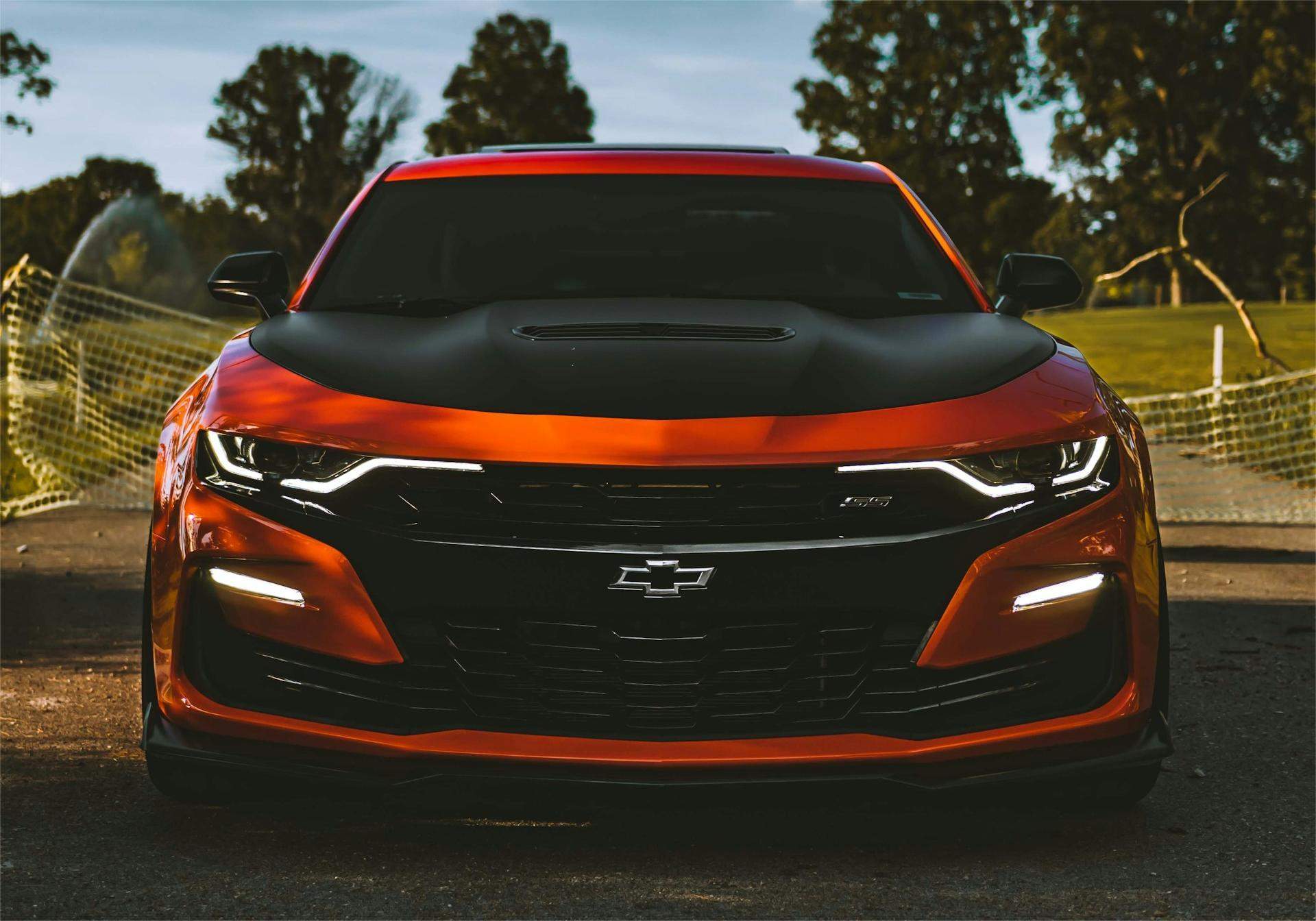


Image for illustrative purposes only. This conceptual rendering was generated using AI to represent the rumored 2028 design.
The 2028 Chevrolet Camaro revival news is currently causing the automotive world to reel with excitement. After months of quiet speculation, significant leaks from inside General Motors have finally painted a clear picture of the seventh-generation icon. Initially, fans feared the nameplate would transition into an all-electric crossover. However, the latest reports confirm a dramatic shift back to high-performance internal combustion engines. This decision represents a bold commitment to the enthusiast market. Consequently, the upcoming Camaro is poised to redefine the balance between traditional muscle and modern sophistication.
A Strategic Reversal: From Electrons to Octane
The journey toward the 2028 Chevrolet Camaro revival has been anything but predictable. For several years, General Motors signaled a total commitment to its Ultium battery architecture. Many industry insiders assumed the Camaro would emerge as a direct competitor to the Porsche Taycan or the Tesla Model S. Nevertheless, global market conditions have shifted significantly in the last eighteen months. Specifically, the demand for high-end electric performance vehicles has leveled off.
Furthermore, enthusiasts have remained vocal about their desire for the visceral experience of a gasoline engine. Therefore, GM leadership chose to pivot back to internal combustion for this specific project. This strategic move allows the company to capitalize on a segment that other manufacturers are currently abandoning. While competitors move toward smaller displacement or hybrid-only setups, Chevrolet is doubling down on displacement. Consequently, this revival is not just a return; it is a statement of mechanical defiance.
Notably, this decision was also driven by the current infrastructure landscape. Many performance car owners still prefer the convenience and reliability of the internal combustion engine for long-range touring. As a result, the 2028 model will cater to those who prioritize driving dynamics over digital gimmicks. Ultimately, the pivot back to gasoline ensures that the seventh generation retains the soul of its predecessors.
Engineering the Foundation: The Alpha 2 Evolution
The structural integrity of the 2028 Chevrolet Camaro revival relies on a highly refined version of the Alpha 2 platform. Originally developed for Cadillac, this architecture is widely considered one of the best-handling rear-wheel-drive platforms in existence. Engineers have spent the last year optimizing the chassis specifically for the Camaro’s aggressive performance targets. For instance, the new design utilizes a higher percentage of structural adhesives and laser welds. These improvements significantly increase torsional rigidity compared to the previous generation.
Moreover, the use of the Alpha 2 platform allows for a sophisticated multi-link front suspension system. This setup provides superior tire contact patches during high-G cornering. Specifically, the engineering team has integrated a new generation of “MagnaRide” magnetorheological dampers. These shocks can adjust their firmness in milliseconds based on road conditions. Consequently, the Camaro can transition seamlessly from a compliant highway cruiser to a razor-sharp track weapon.
Furthermore, the shared architecture with the Cadillac CT5 provides substantial economies of scale. This allows Chevrolet to invest more heavily in premium materials without skyrocketing the base price. Notably, the chassis features extensive use of magnesium in the front subframe to reduce “nose-heavy” handling characteristics. Therefore, the weight distribution is expected to hover near a perfect 50/50 split. Ultimately, this engineering foundation ensures that the Camaro can out-handle vehicles costing twice as much.
The Heart of the Beast: Technical Specs of the 6.7L LS6
Perhaps the most anticipated feature of the 2028 Chevrolet Camaro revival is the return of the LS6 designation. This new 6.7L V8 is a masterpiece of modern engine design. Unlike older pushrod engines, this unit incorporates a dual-overhead-cam (DOHC) valvetrain with independent variable valve timing. Specifically, this architecture allows the engine to breathe more efficiently at high RPMs. As a result, the projected output sits at a staggering 535 horsepower and 510 lb-ft of torque.
In addition to pure power, the engine features a new high-pressure direct injection system. This technology ensures that every drop of fuel is atomized perfectly for maximum thermal efficiency. Consequently, the new LS6 is expected to be the most fuel-efficient V8 in Camaro history. To further improve economy, the engine utilizes a “dynamic fuel management” system. This can deactivate up to six cylinders when the vehicle is cruising under light load.
Moreover, the cooling system has been completely redesigned to handle the thermal loads of track use. Specifically, the car features five separate heat exchangers positioned behind the front fascia. These radiators manage the temperature of the engine oil, transmission fluid, and engine coolant simultaneously. Therefore, drivers can enjoy extended track sessions without worrying about heat soak. Interestingly, the engine also features a “dry-sump” oiling system on higher trims. This ensures consistent lubrication even during high-speed banked turns.
Design Language and the Revolutionary Four-Door Sportback
The visual identity of the 2028 Chevrolet Camaro revival represents a major departure from the “retro” styling of the past decade. Designers have moved toward a “technical-industrial” aesthetic that emphasizes aerodynamic efficiency. Specifically, the front of the car features ultra-slim LED “blade” lighting and a massive functional hood extractor. Consequently, the vehicle looks significantly more modern and intimidating than the sixth-generation car.
However, the most significant news involves the introduction of a four-door variant. Industry reports suggest that this “Sportback” model will serve as a practical alternative to the traditional coupe. Specifically, engineers have extended the Alpha 2 wheelbase by approximately three inches to improve rear passenger comfort. This modification allows for easier ingress and egress without ruining the car’s aggressive profile. Furthermore, the four-door version will utilize a frameless window design to maintain a sleek, coupe-like silhouette.
Notably, this variant is being benchmarked directly against the Cadillac CT5-V Blackwing. Designers have opted for a sharply raked roofline that terminates in a functional liftback rather than a traditional trunk lid. This choice maximizes cargo versatility and improves high-speed stability. Therefore, the four-door Camaro is not a “watered-down” sedan but a legitimate performance machine with added utility. Consequently, Chevrolet expects this body style to attract a new generation of buyers who previously chose European sport sedans. By integrating these structural changes, the brand can successfully compete in a more premium market segment.
Production Logistics at Lansing Grand River
General Motors has confirmed that the 2028 Chevrolet Camaro revival will call the Lansing Grand River (LGR) plant home. This facility in Michigan is already the production hub for GM’s most sophisticated rear-wheel-drive vehicles. To prepare for the Camaro, the plant is currently undergoing a massive $250 million technological overhaul. Specifically, the investment includes new robotic body-shop modules that can handle the complex Alpha 2 assembly process.
Moreover, the plant will implement a new “closed-loop” aluminum recycling system. This ensures that any scrap metal from the stamping process is immediately melted down and reused for new parts. Consequently, the production process for the Camaro will be significantly more sustainable than in previous years. Furthermore, the workforce at LGR is receiving specialized training on the assembly of the new LS6 engine. This ensures that every vehicle meets the highest possible quality standards before leaving the factory.
Notably, the production schedule is designed for maximum flexibility. The assembly lines can shift between the Camaro coupe, the four-door sportback, and the Cadillac CT5 based on real-time market demand. Specifically, this “just-in-time” manufacturing approach reduces overhead costs and prevents excess inventory. Therefore, Chevrolet can maintain a more stable pricing structure for consumers. Ultimately, the commitment to Lansing Grand River proves that American manufacturing remains at the forefront of automotive innovation.
The Modern Cockpit: Digital Integration and Super Cruise
Step inside the cabin of the 2028 Chevrolet Camaro revival, and you will find a total digital transformation. Designers have replaced the traditional analog gauges with a 33-inch diagonal advanced LED display. This screen wraps around the driver, providing critical information in high-definition clarity. Specifically, the system runs on a new “Ultifi” software platform that allows for over-the-air (OTA) updates. Consequently, the car’s infotainment and performance software will actually improve over time.
In addition to the screens, the interior features a “driver-centric” layout that minimizes physical clutter. Most secondary controls have been integrated into the steering wheel or the haptic-feedback center console. Furthermore, the seats are upholstered in a new “sustainable suede” made from recycled ocean plastics. This material offers incredible grip during performance driving while remaining easy to clean.
Moreover, the 2028 Camaro will feature the latest version of GM’s Super Cruise technology. This system allows for hands-free driving on over 400,000 miles of compatible highways in North America. Specifically, the Camaro’s version of Super Cruise includes a “Performance Cruise” mode. This mode optimizes gear changes and throttle response for a more engaging highway experience even when the driver is not steering. Therefore, the Camaro becomes an incredibly capable long-distance grand tourer. Ultimately, these technological advancements ensure that the Camaro remains competitive in a tech-heavy market.
Competitive Analysis: The New Muscle Car Wars
The landscape for the 2028 Chevrolet Camaro revival is more competitive than ever before. Ford has recently updated the Mustang with new Dark Horse variants, and Dodge is pushing its “Sixpack” Hurricane engines. However, Chevrolet is positioning the Camaro as the more refined and technically advanced alternative. Specifically, the use of the Alpha 2 platform gives the Camaro a distinct weight and handling advantage over the heavier Dodge platform.
Furthermore, the decision to retain a naturally aspirated V8 provides a unique selling point. While Ford and Dodge are turning to turbocharging or electrification, the Camaro offers a pure, high-revving experience. Consequently, many purists are expected to migrate toward the Chevrolet brand. Moreover, the addition of the four-door sportback allows Chevy to attack the market from two different angles. They can satisfy the traditional coupe buyer while simultaneously appealing to the sport-sedan enthusiast.
Notably, the marketing strategy will focus heavily on “track-ready” capability. Every V8-powered Camaro will come standard with a heavy-duty cooling package and upgraded Brembo brakes. Specifically, the brake rotors use a two-piece design to reduce unsprung weight and improve heat dissipation. Therefore, the Camaro is ready for the racetrack straight from the showroom floor. Consequently, this focus on durability and performance will likely solidify the Camaro’s reputation as the driver’s choice in the segment.
Market Positioning and Expected Pricing
When the 2028 Chevrolet Camaro revival finally reaches dealerships, the pricing will be a major factor in its success. Insiders suggest that the entry-level four-cylinder model will start around $38,000. Specifically, this price point allows younger buyers to enter the brand without a massive financial burden. However, the V8-powered “SS” models are expected to begin near $49,000. This pricing remains highly competitive compared to premium European coupes.
Furthermore, the top-tier “Z-Spec” models will likely push toward the $75,000 range. These versions will include carbon-fiber aero kits, forged wheels, and the most aggressive suspension tuning. Notably, Chevrolet plans to offer a wide range of “performance parts” through its official catalog. This allows owners to customize their vehicles with factory-backed warranties. Consequently, the Camaro becomes a highly personalized expression of the owner’s taste.
Ultimately, the goal is to make the Camaro a profitable and sustainable nameplate for the long term. By sharing development costs and using a flexible production strategy, GM can avoid the pitfalls that led to the previous hiatus. Specifically, the brand is targeting a balanced mix of “daily drivers” and “weekend warriors.” Therefore, the seventh generation is designed to be as practical as it is powerful. In conclusion, the 2028 Camaro represents a masterclass in modern product planning and enthusiast-driven engineering.
Conclusion: A New Era for an American Legend
In conclusion, the 2028 Chevrolet Camaro revival is a triumphant return for one of the most storied names in automotive history. By embracing the Alpha 2 platform and the new 6.7L LS6 V8, General Motors has ensured that the seventh generation is a world-class performer. Specifically, the addition of a four-door sportback variant shows a willingness to evolve and meet the needs of a changing market. Consequently, the Camaro is no longer just a “muscle car”—it is a sophisticated, global sports sedan and coupe.
Furthermore, the commitment to internal combustion in a rapidly changing world is a bold and welcome move for enthusiasts. It provides a bridge between the analog past and the digital future, offering the best of both worlds. Therefore, the next few years will be an exciting time for anyone who loves the smell of gasoline and the roar of a V8. Whether on the track or the open highway, the 2028 Camaro is ready to reclaim its throne. Ultimately, this revival proves that when it comes to the Camaro, the story is only just beginning.