



Featured Image by Cook aynne on Unsplash
Introduction: Japan in the Early 1990s — Laying the Groundwork for a Legend
Japan’s economic and Social Backdrop
In the early 1990s, Japan was navigating one of its most challenging economic periods. The dizzying highs of the 1980s “bubble economy” had collapsed, giving way to what became known as the Lost Decade. GDP growth slowed to around 1.3%, deflation took root, and unemployment—particularly among the youth—climbed. This shift forced both individuals and companies to rethink priorities, becoming more cautious with spending and investments.
Gasoline prices in Japan during this time were notably high compared to many Western countries, due in part to heavy taxation and the country’s dependence on imported oil. In urban areas, the high cost of car ownership—parking fees, shaken (vehicle inspection), and fuel—meant that many young professionals relied heavily on public transport. Yet for enthusiasts, these challenges only intensified the desire for vehicles that offered real driving excitement.
Lifestyle and Youth Culture
Despite economic stagnation, the early ’90s were a rich period for Japanese pop culture. The youth sought identity and expression through fashion subcultures, street racing, and music. The bosozoku biker gangs, drifting crews, and touge racers in mountain passes became underground icons, influencing fashion and music videos.
Music Scene
J-Pop reached new heights, driven by artists like Namie Amuro, TRF, and globe. The influence of video games and anime also spilled into music culture, with soundtracks from titles such as Final Fantasy VI and Chrono Trigger becoming part of the zeitgeist. Western music also made waves in Japan, with grunge and hip-hop steadily gaining traction.
Film and Television
Japan’s entertainment industry thrived in the ’90s, with anime like Neon Genesis Evangelion and Initial D making lasting cultural marks. Initial D, in particular, became a love letter to Japanese street racing culture, later helping to elevate the allure of cars like the Supra.
News and Politics
The nation wrestled with economic reform, banking instability, and a slow response to deflation. Still, optimism simmered, and companies like Toyota used the challenge as an opportunity to innovate.
Sports and Motorsport
In domestic baseball, the Yomiuri Giants remained a powerhouse, while in motorsport, Japanese engineering began to shine on the global stage. Domestic GT championships were heating up, with cars like the Supra poised to take center stage in the Japan Grand Touring Car Championship (JGTC). The moment was ripe for a new performance icon to emerge—and Toyota delivered.
The Toyota Supra MK4: Performance and Specifications

When the Toyota Supra MK4 (A80) debuted in 1993, it was a culmination of Toyota’s racing experience, engineering precision, and a desire to prove that Japanese sports cars could stand toe-to-toe with the best from Europe and America.
Performance Specs:
- Production Years: 1993–2002
- Engine Options:
- 2JZ-GE (Naturally Aspirated) — ~220 hp, ~210 lb-ft torque
- 2JZ-GTE (Twin-Turbo) — ~276 hp (Japan’s gentlemen’s agreement rating), US spec ~326 hp, ~315 lb-ft torque
- 0–60 mph:
- NA: ~6.5–7.0 sec
- TT: ~4.6–4.9 sec
- Top Speed: ~225 km/h (~140 mph, NA); 250+ kmKeep at 322./h (155+ mph, TT)
- Transmission:
- NA: 5-speed manual
- TT: 6-speed Getrag manual; optional 4-speed auto
- Chassis & Handling: Rear-wheel drive, double-wishbone suspension, near-perfect weight distribution, lightweight aluminum components
- Quarter-mile: ~13.5 sec @ 106 mph
- Motorsport Pedigree: Multiple JGTC championships, Le Mans participation, Pikes Peak hill climbs
The MK4 Supra’s 2JZ-GTE engine would become legendary for its durability and tuning potential, capable of handling over 1,000 horsepower with internal upgrades—earning it mythic status among tuners worldwide.
Design and Engineering Philosophy
The A80’s design wasn’t just about looking fast—it was engineered with aerodynamics and balance at the forefront. The curvaceous body, integrated rear wing (on turbo models), and underbody airflow management gave it a Cd of 0.33, remarkable for a ’90s sports car.


The A80 Supra’s interior was indeed driver-focused, featuring a wrap-around cockpit, a tilted center console, and large analog gauges. This design philosophy aimed to minimize distractions and enhance the driving experience.
Toyota’s engineers also put a significant effort into weight reduction. They used lightweight aluminum for the hood and the removable targa roof panel on models equipped with it. As for the “hollow carpet fibers,” this is a well-known detail about the car’s development, but it’s often more of a fun fact than a significant contributor to overall weight reduction. The real weight savings came from larger components and design choices, like the use of aluminum, a plastic fuel tank, and a hollow rear spoiler on turbo models.
This obsessive focus on weight savings was a key part of the A80’s engineering, ensuring it could compete with lighter European sports cars.
Positioning the Car in Its Time
Why the MK4 Supra Was Created
Toyota had already built three generations of the Supra, each more capable than the last, but the MK4 marked a decisive leap. The goal was simple: create a car that could rival European exotics while maintaining Toyota’s reliability and everyday usability.
Arrival in America and Public Reaction

The MK4 landed in the United States in 1993, shocking enthusiasts with its exotic curves, enormous rear wing, and supercar-level performance. While praised by the press, its $40,000+ price tag put it in Corvette territory—leading to modest sales numbers (about 12,000 units in the U.S. over six years).
What Trend It Answered
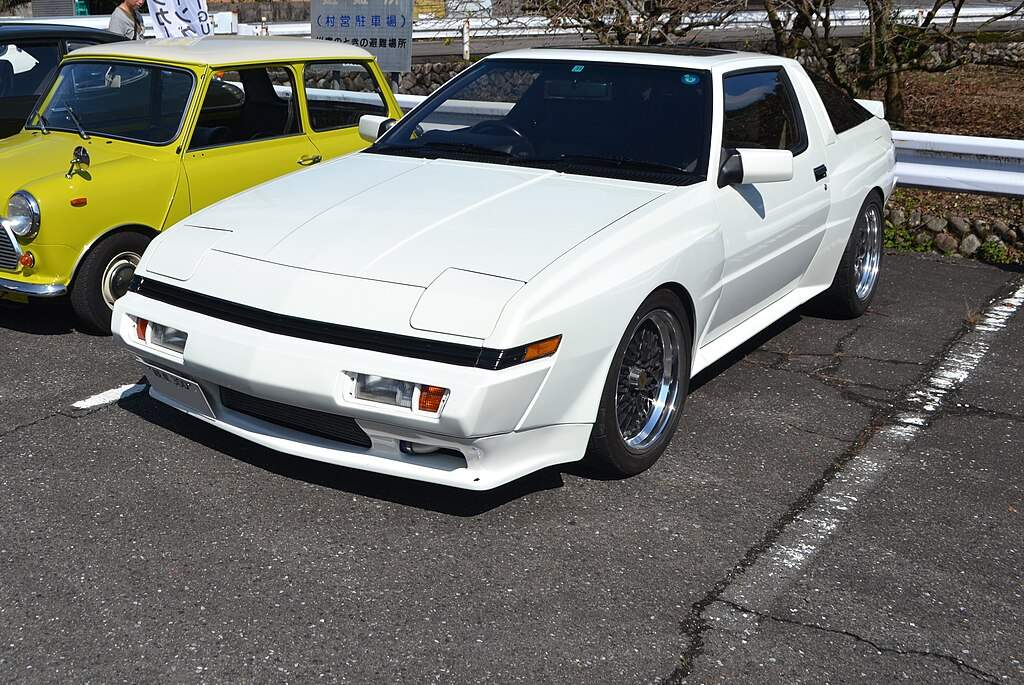
In the ’90s, there was a global appetite for Japanese high-performance cars—Nissan had the Skyline GT-R, Mazda the RX-7, and Mitsubishi the 3000GT VR-4. The Supra was Toyota’s definitive answer, prioritizing bulletproof engineering and tunability.
Competitor Comparison
- Toyota Supra MK4 TT From: 0–60 mph 4.6–4.9 sec Power: 326 bhp: Twin-turbo, legendary 2JZ, tuning potential
- Nissan 300ZX TT From: 0–60 5.0 sec Power: 300 bhp: Agile V6 TT, stylish but less tunable
- Mazda RX-7 FD From: 0–60 mph 5.5 sec Power: 255 bhp: Lightweight rotary, superb handling, high upkeep
- Mitsubishi 3000GT VR-4 From: 0–60 mph 5.5–6.0 sec Power: 300 bhp: AWD, tech-heavy, heavier than rivals
What the Journalists Said
Japanese Reviews
Japanese automotive media, including renowned outlets like Best Motoring, consistently praised the MK4 Supra for its remarkable balance of speed and stability. Reviewers highlighted its composure at high speeds—reflecting the car’s aerodynamic design and finely tuned suspension. The 2JZ-GTE engine was widely regarded as a technical marvel, noted for its responsiveness thanks to a twin-turbo setup and legendary durability that allowed it to stand the test of time and tuning.
American Reviews
In the United States, publications such as Car and Driver marveled at the Supra’s ability to rival much pricier European supercars in acceleration, while maintaining a refined driving experience. Motor Trend echoed this view, describing the Supra as blending the civility of a luxury car with the heart of a race car. Testers praised its balance of power and handling, calling it an exceptional grand tourer that rewarded skilled driving.
Rare Editions and Collectibility
The most sought-after trims today are:
- RZ – Twin-turbo, Getrag 6-speed, LSD, and performance suspension
- SZ-R – High-performance naturally aspirated version with some RZ hardware
- TRD 3000GT – An ultra-rare aero kit homologation special, now worth hundreds of thousands at auction
- UK-Spec – Factory 326 hp rating, larger brakes, and other Euro-specific features
In recent years, unmodified MK4 Supras have fetched $150,000–$250,000 at Barrett-Jackson and Bring a Trailer, with low-mileage examples exceeding even that.
The Supra’s Hollywood Moment — The Fast and the Furious

If the MK4 Supra had remained only a niche JDM favorite, it might have faded quietly after production ended in 2002. But in 2001, its fate changed forever with the release of The Fast and the Furious.
Paul Walker’s character, Brian O’Conner, famously rebuilt a wrecked Supra into a bright orange, high-performance monster that not only won races in the film but also the hearts of a generation. The now-iconic scene where it beats a Ferrari on the highway became a defining moment in car cinema.
Legacy in Modern Car Culture
The MK4 Supra is not just a relic—it remains a living, breathing part of global car culture. From drift competitions in Japan to drag strips in America, the Supra’s DNA lives on. Its successor, the GR Supra, nods to its heritage, but purists still argue that nothing can match the raw analog soul of the A80.
Conclusion: Why the Toyota MK4 Supra Still Matters

The Toyota Supra MK4 is more than a machine—it’s a time capsule of passion, engineering, and cultural influence. Born during economic hardship, it proved that even in challenging times, bold ideas could thrive. It merged Japanese precision with international appeal, created a platform for both professional motorsport and grassroots tuning, and became a hero car for millions.
Today, as modern cars become quieter, heavier, and more digital, the MK4 remains a raw, analog reminder of what driving can feel like. Its legend is not just in quarter-mile times or dyno charts, but in the smiles of those who have driven it, the communities that have formed around it, and the dreams it continues to inspire.
It’s not just a sports car.
It’s a symbol of an era, a piece of cinematic history, and proof that sometimes, the best way to build a future classic… is to give it a soul.
You May Also Like:
General History and Development
- Wikipedia’s Toyota Supra page: Provides a comprehensive overview of the Supra’s history, from its origins to the MK4’s performance specs and production details.
- Olathe Toyota’s Blog: A detailed historical write-up on the MK4 Supra, including its development process and market challenges.
Engine and Performance
- Car and Driver’s 1993 Comparison Test: A classic review that pits the Supra Turbo against its 1990s rivals like the Corvette, 300ZX, and RX-7, detailing its performance capabilities.
- Toyota Supra in Motorsport (Wikipedia): This page includes information on the 2JZ-GTE’s durability and tuning potential in a drag racing context.
Sales and Pricing
- HotCars Article on MKIV Supra Value: Provides specific U.S. sales figures for the A80 generation.
- Bring a Trailer Auction Results: Searching “Toyota Supra” on Bring a Trailer will show you numerous examples of recent auction sales, with many unmodified, low-mileage cars fetching well over $150,000.
Cultural Influence
- Reddit Discussion on The Fast and the Furious: This thread and others like it on Reddit and car forums provide a wealth of anecdotal evidence and enthusiast consensus on how the movie influenced car culture.
- Endurance Warranty Article: Discusses how The Fast and the Furious franchise changed car culture and helped popularize cars like the Supra.


.jpg)