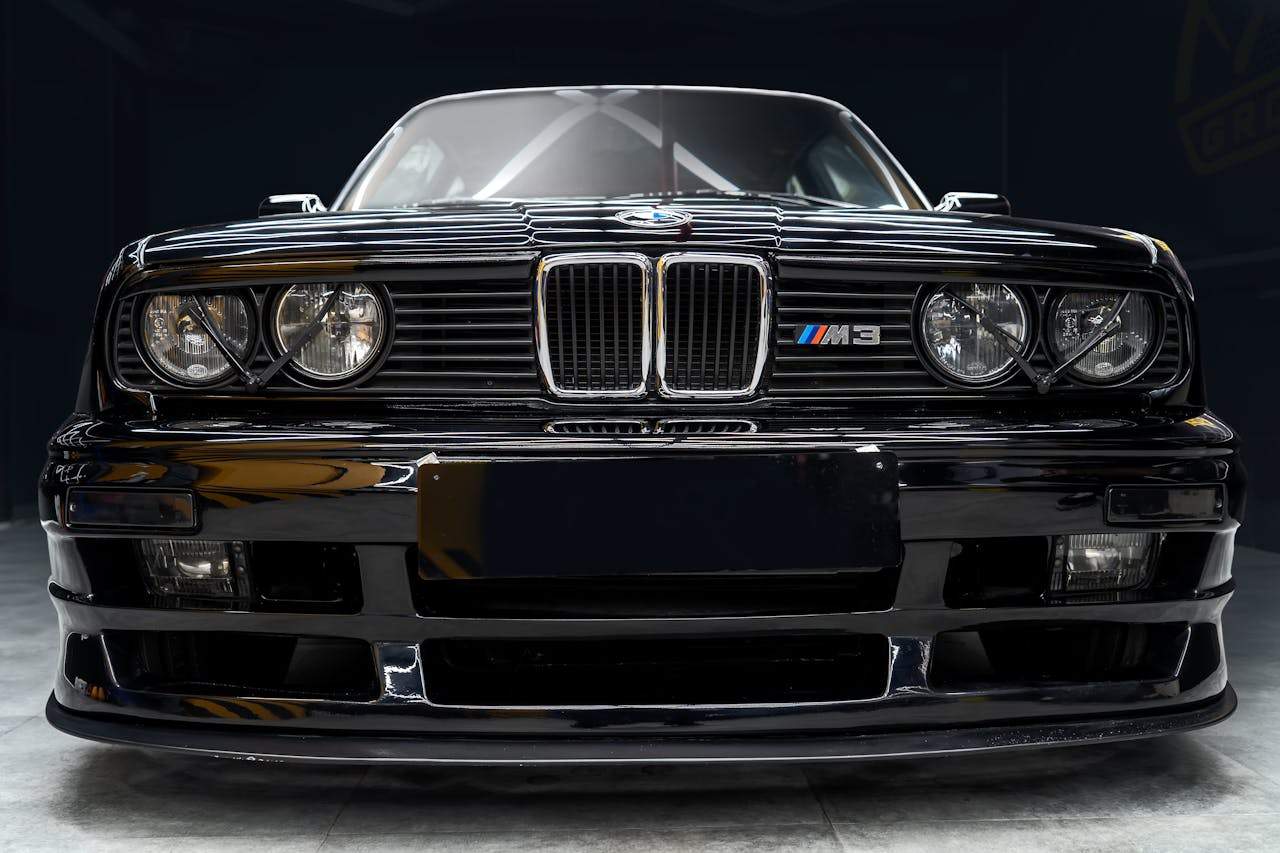


Featured Image by Matti Blume, CC BY-SA 4.0, via Wikimedia Commons
Introduction – “What Was Going On?”
In the mid-1960s, Italy was experiencing its post-war economic miracle, a period of rapid industrial growth, rising incomes, and modernization. Northern cities like Milan, Turin, and Bologna became hubs for innovation in manufacturing, design, and technology. Italian culture, long rooted in craftsmanship and aesthetics, was blending tradition with modernity. Automobiles were central to this cultural shift, with Ferrari, Maserati, and Alfa Romeo setting international standards for engineering and design. Beyond cars, industrial design, fashion, and architecture flourished, making Italy a global trendsetter in style and function.
Society itself was transforming. A growing middle class enjoyed higher disposable incomes, enabling new leisure pursuits, travel, and consumerism. Music shaped youth culture, with Italian pop icons such as Mina and Adriano Celentano dominating the airwaves while British Invasion acts and American rock inspired a generation eager for freedom and expression. Cinema thrived, with directors like Federico Fellini and Michelangelo Antonioni exploring social change, identity, and modernity.
Sports, particularly football (soccer), captivated the nation, while Italian motorsport achieved international renown. Ferrari, Maserati, and Alfa Romeo victories in Formula racing and endurance events fostered national pride. Television spread culture, entertainment, and news into homes across Italy, shaping aspirations and trends. Amid this dynamic backdrop, Iso Rivolta introduced the Grifo—a car blending Italian style and engineering with American V8 performance. The Grifo catered to an elite audience seeking elegance, thrilling performance, and individuality in a grand tourer.
Position the Car in Its Time
Why the Car Was Created:
Renzo Rivolta, originally a refrigerator and motorcycle manufacturer, envisioned a grand tourer combining Italian design finesse with American engine reliability. He aimed to create a car capable of competing with Europe’s best while offering comfort, usability, and thrilling performance. Giotto Bizzarrini, formerly of Ferrari, developed the chassis and suspension to handle torque-heavy V8 engines with precision on winding roads. Giorgetto Giugiaro at Bertone designed the body, producing aggressive yet elegant lines that remain iconic today.
American V8s, mainly from Chevrolet and Ford, provided durability, torque, and horsepower unmatched by contemporary European engines. This combination allowed the Grifo to excel in straight-line acceleration, cornering stability, and long-distance touring comfort. Rivolta’s vision was a versatile car for winding country roads, fast highways, and city streets—a statement of style, performance, and sophistication.
How People Reacted at Launch:
Debuting in 1965, the Grifo captured attention immediately. Journalists praised its styling and performance, while affluent buyers admired its exclusivity. Reviews highlighted its dual personality: elegant and comfortable for city streets, thrilling and powerful for high-speed driving. Its rarity, Bertone design, and American V8 performance positioned it as a grand tourer for discerning enthusiast
Vehicle Performance & Driving Impressions
The Iso Grifo was celebrated for its seamless combination of Italian chassis dynamics and American engine power. While specifications were impressive, the driving experience defined its reputation. The Chevrolet 327 V8 provided nimble handling and adequate power for city streets, while the 427 and 454 engines offered exhilarating acceleration that made long highway stretches a thrill. The Ford 351 option delivered reliable torque and smooth operation for touring. Transmission choices included a 4-speed BorgWarner manual, a 5-speed ZF manual, and a 3-speed automatic, catering to different driving preferences. Acceleration to 60 mph came in roughly 6.1 seconds, and the car could reach top speeds of around 171 mph, all while weighing approximately 3,150 pounds.
Drivers often remarked on the unique character of the V8 engines. The 427 and 454 models offered a deep, throaty roar that intensified with revs, creating an emotional connection between driver and car. On Italian highways, the Grifo’s torque allowed effortless overtaking, while tight mountain passes tested its suspension and chassis balance. Series 2 improvements, including refined damping and updated anti-roll bars, enhanced stability through high-speed corners, giving drivers confidence without sacrificing comfort. Owners praised the precise yet forgiving steering, noting that it communicated road feedback without tiring the hands during long tours.
Long-distance drives highlighted the car’s versatility. Series 1 owners noted slight body roll in sharper bends, whereas Series 2 drivers experienced smoother handling thanks to suspension and weight distribution tweaks. The cabin, though snug, offered driver-focused ergonomics with well-placed gauges and controls, reducing fatigue on extended trips. Even over uneven rural roads, the Grifo maintained composure, combining muscle-car power with grand tourer comfort. The engine’s low-end torque made city traffic and highway cruising equally effortless, while the 454 model transformed open stretches into a thrilling acceleration experience.
Evolution: Series I, 7-Litri, and Series II

The early Grifos (Series I) emphasized sleek styling and the balance of power with refinement. In 1968, Iso responded to enthusiasts craving more brute force by offering the Grifo 7-Litri, equipped with Chevrolet’s massive 427-cubic-inch big-block V8. These cars required structural reinforcements, upgraded suspension, and larger cooling systems. They became some of the fastest GTs of their era, pushing the Grifo into direct competition with Ferrari’s most powerful offerings.

By 1970, Iso introduced the Grifo Series II, distinguished by a sharper nose, hidden headlights, and other refinements aimed at keeping the car competitive in a changing market. Along with updated interiors and improved ergonomics, the Series II offered the Chevrolet 454 big-block, giving drivers extraordinary torque. Production numbers were low — only a few dozen were built — making the Series II exceptionally rare today. The changes reflected Iso’s attempt to balance feedback from journalists and owners while responding to intensifying competition from Lamborghini, Maserati, and Ferrari.
Journalist Reviews at the Time
In the mid-1960s, the automotive world was abuzz with the introduction of the Iso Grifo, a car that seamlessly blended Italian design with American muscle. Esteemed publications like Motor Trend, Car and Driver, and Road & Track took notice, offering their perspectives on this unique grand tourer. Motor Trend lauded the Grifo for its “unfussy American powertrain and well-engineered chassis,” describing it as an “Italian sophisticate that’s easy to drive.” The magazine highlighted the car’s communicative steering and the harmonious integration of its Italian styling with American engineering, making it a standout in its class. Car and Driver focused on the Grifo’s performance capabilities, noting its impressive acceleration and handling.
The publication emphasized the car’s ability to deliver both comfort and speed, catering to enthusiasts seeking a blend of luxury and performance. Road & Track appreciated the Grifo’s design and engineering, particularly the work of Giotto Bizzarrini and Giorgetto Giugiaro. The magazine praised the car’s balance and agility, noting its suitability for both spirited driving and long-distance touring. These reviews from respected automotive journalists underscored the Iso Grifo’s position as a formidable competitor in the luxury sports car market. Its combination of Italian aesthetics and American performance captured the attention and admiration of the automotive press, solidifying its legacy as a classic grand tourer.
Competitors
The Iso Grifo competed with Europe’s elite sports cars:
Ferrari 275: GTB, GTS, GTB/4 & GTS/4 NART Spyder – From 1964 to 1968

The Ferrari 275 GTB, produced between 1964 and 1968, was one of Maranello’s most admired grand tourers. Early models, such as the 275 GTB and GTS built from 1964 to 1966, carried a 3.3-liter Colombo V12 producing around 280 hp. These cars were elegant but also capable of reaching speeds near 160 mph, making them formidable road companions. In 1966 Ferrari introduced the 275 GTB/4, which featured the first production four-cam V12 from the company, raising output to about 300 hp while sharpening throttle response and high-revving capability.
This variant, produced until 1968, gave the Grifo even tougher competition, though it still lacked the effortless torque of the Iso’s American V8s. In 1967, Ferrari unveiled the limited-run 275 GTS/4 NART Spyder, a rare and exotic open-top version that has since become legendary among collectors. While Ferrari’s 275 range excelled at precision handling and pedigree, the Iso Grifo countered with accessible power, long-legged cruising ability, and comfort that made it better suited for real-world driving than some of Maranello’s purer but less forgiving creations.
The Maserati Ghibli: Coupe, Spyder & SS – From 1967 to 1973

The Maserati Ghibli, built from 1967 to 1973, represented another strong rival. The original Ghibli Coupe arrived with a 4.7-liter V8 producing around 330 hp, pairing aggressive styling with smooth grand touring manners. By 1969, Maserati expanded the lineup with the Ghibli Spyder, a limited-production convertible that combined performance with an air of exclusivity.
In 1970, the Ghibli SS pushed the car even further with a larger 4.9-liter V8 delivering up to 340 hp and a higher top speed of roughly 174 mph. Though these Maseratis were refined and luxurious, the Iso Grifo offered a different flavor — American V8 torque in an Italian chassis that provided effortless acceleration. While the Ghibli excelled in long-distance refinement, the Grifo’s combination of raw power and comfort meant it could hold its own on both the autostrada and the autobahn.
The Lamborghini Miura: P400, S (P400S) & SV (P400SV)

The Lamborghini Miura, produced from 1966 to 1973, became the poster child of the Italian supercar revolution and one of the most glamorous rivals to the Iso Grifo. The original Miura P400 (1966–1969) stunned the automotive world with its radical mid-engine layout and 3.9-liter V12 producing 350 hp, allowing speeds of nearly 170 mph. In 1969, Lamborghini introduced the Miura S (P400S), which brought not only a slight bump in power to around 370 hp but also improved brakes, suspension tuning, and creature comforts, making it somewhat more livable as a grand tourer.
Finally, the Miura SV (1971–1973) became the ultimate evolution, with 385 hp, a wider stance, and stability that allowed it to flirt with the 180 mph barrier. Compared to the Grifo, the Miura was more exotic and sharper in high-speed cornering, but it was also less practical, with limited luggage space and a reputation for running hot in traffic. The Iso Grifo, by contrast, delivered its thrills through effortless torque, long-legged cruising, and a level of comfort that made it more usable day to day, even if it lacked the sheer drama of Lamborghini’s masterpiece.
An Italian-American Blend: The Iso Grifo’s Unique Place in History
Together, these cars framed the Iso Grifo’s place in history. It may not have had the Ferrari’s racing prestige, the Maserati’s polished refinement, or the Lamborghini’s radical drama, but it carved out its own niche. The Grifo delivered a uniquely Italian-American blend: the elegance of Turin design, the strength of Detroit muscle, and the accessibility that allowed it to stand tall among the greatest exotics of its era.
Racing & Cultural Impact

Though rarely raced professionally, the Grifo’s American engines drew from muscle car technology tested in the U.S., ensuring durability and high-RPM performance. European hill climbs and endurance events occasionally featured Grifos, where torque and balanced chassis delivered competitive times. Grifos were also popular among street enthusiasts and amateur racers. Torque-heavy engines allowed rapid acceleration from a stop, while the suspension maintained control in corners. Italian car clubs recount tales of Grifos outperforming more expensive supercars on straight stretches or twisty roads, cementing its reputation among enthusiasts seeking a grand tourer with muscle-car thrills.
Beyond Mahogany (1975), the Grifo appeared in magazines, exhibitions, and private collections, reinforcing its status as a symbol of luxury and performance. Italian car clubs organized drives along the Amalfi Coast and Tuscany, showcasing both performance and style. Celebrity owners often commissioned custom Grifos with bespoke interiors, paintwork, and upgraded engines. Stories persist of industrialists and European aristocrats proudly displaying Grifos at events, solidifying its cultural cachet. The Grifo demonstrated that European elegance and American power could coexist, influencing a niche of luxury muscle grand tourers and inspiring collaborations between Italian designers and American powertrains.
What It Means Today

With only 413 units produced, early 427 and 454 engine models are highly sought after. Auctions often see these cars reach high six-figure sums, with rare examples surpassing $700,000. Restoration costs can exceed $200,000 for fully authentic models, reflecting the challenge of maintaining Italian-American components. Dedicated clubs and online communities preserve the Grifo’s history, organizing restoration projects, club events, and shows that attract enthusiasts worldwide. Driving a restored Grifo remains a thrilling experience, combining classic V8 power with Italian elegance. Some owners actively participate in vintage rallies and historical racing events, demonstrating the car’s enduring performance.
The Grifo bridged Italian elegance and American muscle, influencing later grand tourers. Its combination of design, performance, and rarity ensures its place among the most remarkable cars of the 1960s.
Conclusion
The Iso Grifo, from Series 1 to Series 2, exemplifies Italy’s innovation, style, and ambition. By pairing Italian elegance with American power, it created a grand tourer combining exhilarating performance, luxury comfort, and practicality. Its legacy endures in collector circles, automotive history, and car culture as a symbol of international engineering excellence.
Here are some links that support the information in this article on the Iso Grifo, categorized by topic.
General History & Specs
Wikipedia: A comprehensive overview of the car’s history, production numbers, and technical specifications, including the different engine and transmission options.
Supercars.net: Detailed specifications for the Iso Grifo 7-Litri, including power, torque, and top speed figures, which align with the performance stats mentioned in this article.
Period Reviews & Driving Impressions
Shannons Club: A retrospective article that quotes a period Car and Driver review, confirming the Grifo’s reputation for being a “sophisticate that’s easy to drive” with an “unfussy American powertrain.”
Competition & Comparison
Wikipedia: The entry for the Lamborghini Miura includes a comparison table with the Iso Grifo and Maserati Ghibli, confirming that these were direct competitors in the grand touring space.
MyCarQuest.com: This article compares the Ferrari 275 GTB/4 and the Lamborghini Miura, offering context for the Grifo’s place in the market. The discussion about the Ferrari’s racing pedigree versus the Miura’s radical design supports the analysis in this article.
Production Numbers & Collector Value
Classic.com: Provides a list of recent auction results for the Iso Grifo, with sale prices that confirm the “high six-figure sums” mentioned in this article.
Bring a Trailer: This auction site shows past sales of various Grifo models, including rare Targa and 7-Litri versions, with sale prices and specific details on production numbers for each variant.