

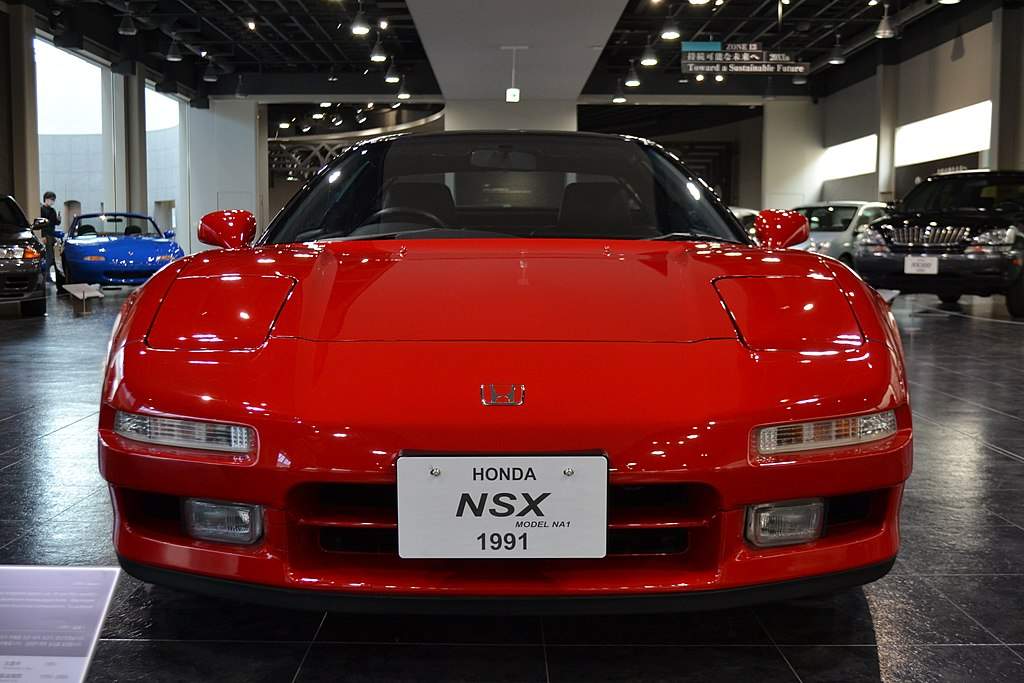

先従隗始, CC0, via Wikimedia Commons
The first-generation Honda NSX, a outstanding example of automotive engineering and design, emerged from the shadows in the late 1980s, daring to challenge the European titans of the supercar world. Born from a relentless pursuit of perfection, the NSX wasn’t just another sports car; it was a statement, a testament to Japanese ingenuity, and a driver’s dream come true.
Aesthetics: A Timeless Elegance

The NSX’s design, penned by legendary automotive designer Minoru Morita, was a harmonious blend of form and function. Its sleek, low-slung profile, reminiscent of a crouching panther, exuded an air of predatory grace. The sharp, sculpted lines, punctuated by the iconic pop-up headlights, created a visual drama that was both aggressive and sophisticated. The use of lightweight aluminum for the body panels not only contributed to the car’s exceptional performance but also accentuated its lithe, athletic physique. The NSX’s timeless aesthetic, free from the fleeting trends of the automotive world, has ensured its enduring appeal, even decades after its production ceased.
Cargo Space: A Practical Touch
Surprisingly for a mid-engine sports car, the Honda NSX offered a surprisingly usable amount of cargo space. The front trunk, accessed via a hinged panel, could accommodate luggage for weekend getaways or even a small golf bag. While not spacious enough for a full-size suitcase, the available storage was sufficient for everyday needs, making the NSX a more practical daily driver than many of its competitors.
Technology and Features: A Revolution in Supercar Engineering

The NSX was not just about raw power; it was a showcase of cutting-edge technology. Its lightweight aluminum chassis, a revolutionary feat of engineering at the time, provided an incredibly rigid and strong foundation. The use of advanced materials extended to the engine, with a 3.0-liter V6 boasting titanium connecting rods and forged pistons, pushing the boundaries of performance and efficiency. The introduction of Honda’s Variable Valve Timing and Lift Electronic Control (VTEC) system further enhanced the engine’s power and responsiveness.

Inside the cabin, the NSX offered a driver-focused cockpit with comfortable and supportive seats. The interior, though relatively spartan by modern standards, exuded a sense of purposeful minimalism. The focus was on functionality and ergonomics, with all controls intuitively placed within easy reach of the driver.
Performance: A Symphony of Speed and Agility

The NSX’s performance was nothing short of exhilarating. The 3.0-liter V6 engine, with its signature high-revving character, delivered a thrilling surge of power, propelling the car to impressive speeds. The car’s mid-engine layout, combined with its exceptional handling and precise steering, provided an unparalleled driving experience. The NSX was not just fast in a straight line; it was incredibly agile and responsive in corners, inspiring confidence and rewarding skillful driving.
Fuel Efficiency: A Remarkable Achievement
For a high-performance sports car, the NSX demonstrated remarkable fuel efficiency. Its lightweight construction and aerodynamic design, combined with the efficient VTEC engine, allowed for surprisingly good fuel economy, especially considering the car’s exhilarating performance. This focus on efficiency was a testament to Honda’s commitment to creating a balanced and sustainable driving experience.
Driving Experience: An Unforgettable Journey

Automotive journalist Alex Monroe described his time behind the wheel of the NSX as nothing short of transformative. “From the moment I pulled onto the road, it stopped feeling like I was driving a machine,” he said. “It was more like a conversation—a seamless, instinctive connection between man and car.”
Monroe spoke of the steering with almost reverent admiration, calling it “poetic” in the way it communicated every subtle contour of the pavement. The engine, he said, was “a living, breathing instrument,” its rising howl as it neared the redline stirring something visceral inside him.
“It’s not just about performance,” Monroe reflected. “It’s about emotion. The NSX doesn’t just reward skill—it awakens passion. In those moments behind the wheel, I wasn’t evaluating a car. I was remembering why I fell in love with driving in the first place.”
Conclusion: A Legacy of Excellence

The Honda NSX, a groundbreaking achievement in automotive engineering, redefined the supercar segment. It proved that a Japanese automaker could not only compete with the best of Europe but also surpass them in certain aspects. The NSX’s combination of breathtaking performance, timeless design, and innovative technology earned it a place in automotive history. It remains a cherished classic, inspiring a new generation of engineers and enthusiasts to push the boundaries of automotive excellence.
The legacy of the NSX extends far beyond its initial impact. It paved the way for future generations of high-performance vehicles, demonstrating that performance and practicality could coexist. The NSX’s influence can be seen in countless modern sports cars, from its sleek design to its innovative engineering solutions.
The first-generation Honda NSX is a true testimony to it’s automotive art and engineering, continues to captivate and inspire. It serves as a reminder that passion, innovation, and a relentless pursuit of perfection can lead to extraordinary achievements.



.jpg)