

Photo by aerovisuals_54 on Unsplash
Lamborghini shocked the world by reviving its most legendary nameplate for the original’s fiftieth anniversary. The Lamborghini Countach LPI 800-4 bridges the firm’s raw, analog past and its electrified future. This limited-production hypercar reimagines the iconic wedge silhouette from a generation’s bedroom posters. Though built on Aventador and Sián DNA, its soul remains rooted in the 1970s.
What Was Going On? 🇮🇹
During the 2021–2022 manufacturing period, Sant’Agata Bolognese became the epicenter of a massive luxury automotive boom. The local factory operated at maximum capacity to meet a record-breaking global backlog—a momentum that has only accelerated. By January 2026, the company confirmed an all-time delivery record of 10,747 cars for the 2025 fiscal year. This era served as the triumphant finale for pure V12 architecture before the factory fully transitioned to hybridized lines like the Revuelto and the newly launched Temerario.
💰 Economy & Lifestyle:
During the 2021–2022 period, Sant’Agata Bolognese transformed into a central hub for Italy’s post-pandemic economic recovery. The region led the nation with a robust GDP growth of 6.6% in 2021, fueled by a massive surge in high-value industrial exports and precision engineering. This industrial boom created an unprecedented backlog of global orders, driving the local manufacturing sector to operate at maximum capacity while maintaining record-low unemployment rates for the specialized workforce.
The era was also defined by a significant transition toward “green” industrialization and digital transformation. Significant capital investments flowed into regional infrastructure, including the creation of a major biomethane plant that converts organic waste into clean energy for thousands of local homes. By late 2022, this synergy of artisanal tradition and sustainable technology resulted in the province of Bologna being ranked first in Italy for quality of life, cementing the area’s status as a premier global benchmark for luxury production and economic resilience.
📰 News/Politics:
The “Direzione Cor Tauri” initiative—a political and corporate roadmap toward environmental sustainability—dominated regional news cycles. Local leaders and factory executives debated how to preserve the soulful roar of Italian engines under increasingly strict European emission laws. This political focus has intensified recently with the 2025–2026 expansion of the factory’s photovoltaic plants, marking a decade of CO2 neutrality for the production site. The synergy between the regional government and the automotive industry remains a pillar of the Italian “Made in Italy” political strategy.
🏆 Sports: A Summer of Triumphant Blue
The sports landscape in Sant’Agata was nothing short of electric during the development era. In the summer of 2021, the Italian national football team captured the UEFA Euro 2020 title in a dramatic Wembley final. This atmosphere of national excellence permeated the factory floor, where the local Bologna FC 1909 remained a constant topic of conversation among the artisans. On the pavement, the proximity of the Imola Circuit brought the pinnacle of global motorsport directly to the doorstep of the region, fueling the competitive spirit required to build an icon.
The Bridge Between Eras: Engineering a Rebirth
One must realize that Lamborghini forged the Countach LPI 800-4 during a period of incredible industrial and social upheaval. While the world was celebrating Italy’s Euro 2020 victory, the engineers at Sant’Agata were working with an almost impossible intensity. They weren’t just “designing a car”; they were executing a high-stakes survival plan. Amidst the cheers for the Azzurri and the roar of Formula 1 returning to Imola, the factory was a hive of quiet, relentless drive to prove that the brand’s V12 soul could survive an increasingly regulated, electrified world.
Getting the vehicle ready for its 112-unit production run meant pushing the limits of rapid prototyping. Because the world was facing significant supply chain constraints, Lamborghini leaned heavily into 3D printing technology to manufacture complex components like the mobile air intakes. This allowed them to bypass traditional tooling delays and maintain a strict delivery schedule that began in early 2022. Every detail, from the photochromatic glass roof to the 3D-printed interior vents, was designed to prove that Lamborghini could honor its history while mastering 21st-century manufacturing. By the time the first private owners took delivery, the factory had successfully transformed an “impossible” nostalgic dream into a street-legal reality that met every modern crash and emission standard. This production legacy paved the way for the Revuelto, the V12 plug-in hybrid that now occupies the same assembly line where the Countach once stood.
Why Lamborghini Created this Car

Lamborghini created this vehicle to honor the legacy of Marcello Gandini’s original 1971 design. The company wanted to prove that their DNA could survive the transition into a new technological age. Beyond a simple marketing exercise, it served as a thank-you to loyal enthusiasts who had supported the brand for half a century. By producing only 112 units—a nod to the original “LP 112” project name—they ensured it would remain one of the most exclusive models in history.
Vehicle Performance Stats
- Engine: 6.5-liter V12 with 48V electric motor
- Total Power Output: 814 CV (802 hp)
- Top Speed: 221 mph (355 km/h)
- 0-62 mph (100 km/h): 2.8 seconds
- Chassis: Carbon fiber monocoque & body panels
- Drive System: All-wheel drive with 4-wheel steering
- Weight: 3,516 lbs (Dry)
How People Reacted to It at Launch
The LPI 800-4 polarized the public but undeniably ignited their passion. Purists debated whether a modern interpretation should exist at all, fearing it might dilute the legend of the original. However, the 112-unit production run sold out almost instantly, proving that the market craved this blend of history and speed. Fans praised the subtle design cues, such as the hexagonal wheel arches and the “periscopio” lines. Most critics agreed that seeing the Countach name on a new car felt like a momentous event in car culture, sparking endless discussions in online forums and at automotive gatherings.
Journalist Reviews at the Time
Period test drives highlighted the car’s dual personality. Many journalists noted that while it looked like a retro throwback, it felt remarkably composed and modern on the road. Top Gear writers mentioned that the V12 remained the undisputed star of the show, providing a visceral soundtrack. Recent long-term analysis by Hagerty (2025) has reaffirmed that while design flaws exist from a puritanical perspective, the car looks “fantastic in person,” successfully integrating the “periscopio” roof into 21st-century geometry. Car and Driver observed that the new car possessed incredible thrust and felt “too well-engineered and slick” to be a flawed gem, unlike the “workout” of the old model. MotorTrend highlighted the rear-wheel steering, which made the massive car feel surprisingly nimble in tight corners.
Comparison with Rivals: The Battle for the Tribute Crown
While the Lamborghini Countach LPI 800-4 is a masterpiece of nostalgia, it exists in a hyper-competitive space where other manufacturers have also looked to their past for inspiration.
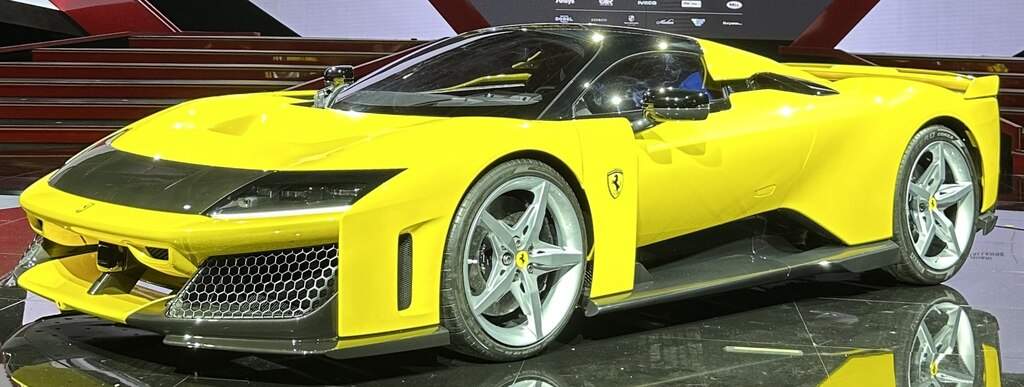
Ferrari Daytona SP3

- Engine: 6.5L Naturally Aspirated V12
- Power: 840 CV (829 hp)
- 0-100 km/h: 2.85 Seconds
- Top Speed: Over 340 km/h (211 mph)
- Weight: 1,485 kg (Dry)
- Drivetrain: Rear-Wheel Drive (RWD)
The Ferrari Daytona SP3 is the purest antithesis to the Countach. While Lamborghini embraced a hybrid supercapacitor to “fill” torque gaps, Ferrari opted for an entirely analog, high-revving V12 that screams to 9,500 RPM. The Daytona is significantly lighter and utilizes a RWD setup, making it a more demanding “driver’s car” compared to the stable, all-wheel-drive confidence provided by the Lamborghini system. It is a car that rewards bravery, whereas the Countach rewards the sensation of effortless, futuristic speed.
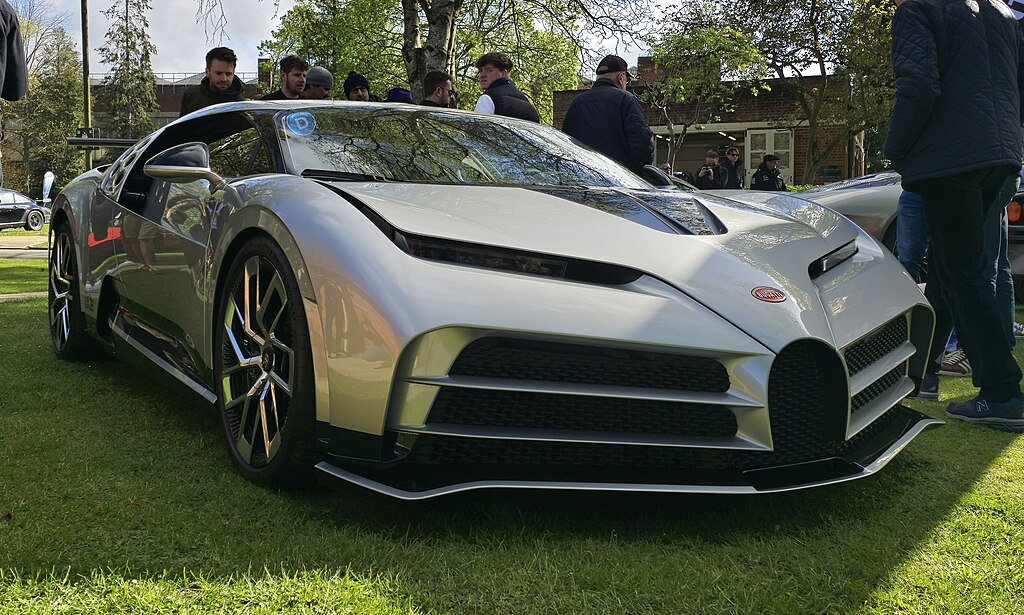
Bugatti Centodieci

- Engine: 8.0L Quad-Turbocharged W16
- Power: 1,600 PS (1,578 hp)
- 0-100 km/h: 2.4 Seconds
- Top Speed: 380 km/h (236 mph)
- Weight: 1,995 kg
- Drivetrain: All-Wheel Drive (AWD)
The Centodieci is a different animal entirely—a tribute to the EB110 that prioritizes sheer, overwhelming force. With nearly double the horsepower of the Lamborghini Countach LPI 800-4, it occupies the ultra-exclusive “megacar” tier. While the Countach is a nimble wedge designed for the road, the Bugatti is a heavy-weight ballistic missile that offers a level of straight-line performance that remains unmatched. It represents the absolute ceiling of internal combustion before the world turned toward batteries.
The Comparison Summary
In the 2026 market, these three vehicles represent the “Holy Trinity” of modern tributes. The Ferrari appeals to the track purist who wants no electronic intervention. The Bugatti appeals to the collector seeking the absolute peak of engineering excess and W16 dominance. However, the Lamborghini occupies the most unique middle ground; it provides the daily-drivable stability of AWD and the futuristic tech of supercapacitors, all while wearing the most recognizable silhouette in automotive history.
Technical Mastery: The Supercapacitor Revolution
At the heart of the Lamborghini Countach LPI 800-4 lies a piece of technology that sets it apart from almost every other hybrid: the supercapacitor. Unlike traditional lithium-ion batteries, a supercapacitor can discharge and recharge at incredible speeds. The 34 CV electric motor is mounted directly to the gearbox to provide an instantaneous “torque-fill” during gear shifts.
The transmission used is the 7-speed Independent Shifting Rods (ISR) system. While often criticized for being “unrefined” compared to modern dual-clutch systems, the ISR was chosen for its mechanical soul and lightweight design. The supercapacitor mitigates the “gap” in acceleration during shifts, creating a surge of power that feels continuous. This system weighs only 34 kilograms, achieving a power-to-weight ratio of 1.0 kg/CV. This allows the car to maintain the visceral, mechanical feel of a single-clutch gearbox without the jerky transitions typical of older flagship models.
Acoustic Engineering: The Voice of a Legend
Engineers spent hundreds of hours tuning the exhaust system to ensure the vehicle sounded distinct from the Aventador. The goal was to replicate the “operatic” shriek of the original Countach LP 400. To achieve this, the exhaust manifolds were redesigned using a hydroformed process to allow for smoother gas flow and higher-pitched harmonics at redline. The result is a soundtrack that begins as a low, mechanical growl and ascends into a piercing, metallic shriek as the V12 engine nears its 8,500 RPM limit.
Aerodynamics and Thermal Management
The original Countach was famously inefficient in the wind tunnel, but the modern remake is a marvel of fluid dynamics. Because the 814 CV powertrain generates immense heat, the car features active aerodynamic elements. The rear spoiler is electronically operated and can move into three distinct positions to balance downforce and drag.
The iconic “shark gills” behind the side windows utilize advanced 3D-printed internal ducting to channel air directly into the secondary radiators. The front splitter and the massive NACA ducts on the doors work in tandem to create a high-pressure zone that sucks the car to the pavement at high speeds, ensuring that even at 221 mph, the car remains planted.
Design Philosophy: Gandini Meets Borkert

The design of the Lamborghini Countach LPI 800-4 was a delicate tightrope walk for Head of Design Mitja Borkert. He faced the daunting task of honoring Marcello Gandini, the man who created the original wedge. Borkert’s team drew inspiration from the entire history of the Countach:
- The Nose: Inspired by the LP 500 prototype with its slim, rectangular headlights.
- The Wheel Arches: Reimagined with the hexagonal geometry seen on the Quattrovalvole models.
- The “Periscopio” Line: The distinctive roofline is artfully integrated into the modern electrochromic glass roof.
Interior Craftsmanship: A Digital Time Machine
Stepping inside the cabin, the driver is greeted by a cockpit that feels like a futuristic lounge. The 8.4-inch portrait touchscreen is unique to this limited series, featuring a dedicated “Stile” button. When pressed, the screen presents a digital exhibition on the car’s design heritage. The seats feature a “squarros” stitching pattern that mirrors the geometry of the 1970s, but they are constructed from lightweight carbon fiber and upholstered in the finest Italian leathers.
Global Impact: From Tokyo to Pebble Beach
The global reception was a testament to the brand’s reach. In Japan, where “Countach culture” is deeply embedded in Manga and underground racing scenes, the car’s arrival in Tokyo was treated as a major event. In the United States, the car’s debut at “The Quail” during Monterey Car Week solidified its status as a collector’s dream. American buyers took the lion’s share of the 112-unit production run, viewing it as a blue-chip asset.
Driving Dynamics: The Mechanical Edge
Driving the car is a visceral experience. The Lamborghini Dynamic Steering (LDS) and Rear-Wheel Steering (RWS) systems work together to make the car feel smaller than its footprint suggests. At low speeds, the rear wheels turn in the opposite direction to the front, effectively shortening the wheelbase for agility in tight hairpins. At high speeds, they turn in parallel, providing stability that allows the driver to exploit the 802-horsepower output with total confidence.
Ownership Experience and Maintenance: The 2026 Standard
Owning a Lamborghini Countach LPI 800-4 in 2026 requires a specialized approach to maintenance. Because of the supercapacitor technology and the carbon-fiber monocoque, only a handful of Certified Lamborghini Master Technicians are qualified to perform major services. Routine maintenance includes checking the photocromatic glass roof mechanisms and ensuring the 48V electric motor’s cooling loop is free of debris. Owners are also provided with a specialized service interval for those who keep the cars as museum pieces, ensuring the fluids remain fresh even without high mileage.
Collector Value and the 2026 Market

In 2026, the car has cemented its place as a “Blue Chip” investment. While its original MSRP was roughly $2.75 million, its rarity has made it a frequent star at auctions. Market data from early 2026 shows that while some high-profile auctions saw bids for “standard” specs stall around $1.9M–$2.4M, private sales for unique “Ad Personam” specifications in heritage colors are commanding prices between $2.8 million and $3.5 million. The market increasingly views this model as a “transitional fossil”—the last bridge before the Revuelto’s plug-in hybrid era.
Conclusion
The Lamborghini Countach LPI 800-4 is more than a car; it is a time-traveling sculpture. It captured a moment in 2021 when the world was changing and translated that energy into a tribute to the past. By blending raw mechanical violence with the silent efficiency of a supercapacitor, Lamborghini brought back a feeling of amazement. As we move into the era of the Revuelto, this car remains the definitive bridge that allowed a legend to cross into the future.